Читать книгу "SOYA THE CAT. The Case of the Open Doors"
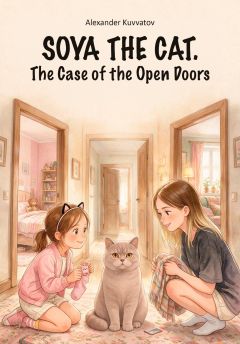
SOYA THE CAT. The Case of the Open Doors
About
SOYA THE CAT
The Case of the Open Doors
Book One The Door Must Stay Open
A funny family mystery about a cat who said everything very clearly, while the humans heard only “meow” – and somehow, little by little, learned what she meant.
Contents
Prologue. The Cat Who Was Choosing a Home
Chapter 1. The Case of Mira’s Room
Chapter 2. The Case of Grown-Up Dasha and the Bag
Chapter 3. The Case of Mom Face
Chapter 4. The Great Open-Door Theory
Chapter 5. The Bathroom That Was Clearly Hiding Something
Chapter 6. The Case of Soya’s Schedule
Chapter 7. Dad’s Couch and the Unfairness of the World
Chapter 8. Pip Brings News
Chapter 9. The Case of Dasha’s Closed Door
Chapter 10. Soya Disappears
Chapter 11. The Investigation Is Led by Mira and Grown-Up Dasha
Chapter 12. The Place That Smelled Like Mom
Chapter 13. New Rules for Humans
Chapter 14. The Night of Open Doors
Epilogue. Morning Report for Pip
For Parents and Educators
Prologue. The Cat Who Was Choosing a Home
The main question of this book: why does a cat need an open door if she does not always want to go in?
Soya speaks clearly. The humans hear only meow. And that is where the home investigation begins.

Soya came home one week ago.
In a carrier.
The carrier was sturdy. It had a door. Soya understood right away: this object was serious, but not to be trusted completely.
Before that, there had been the shelter.
The shelter was not scary. There were bowls, beds, people in clean shirts, voices, smells, and other cats. Too many other cats. At the shelter, doors did not open when a cat wanted them to. Doors opened when a human arrived. That was understandable.
But unpleasant.
Soya was a British Shorthair. On paper, her color was called lilac. The papers were wrong. Papers often misunderstand important things. In sunlight, Soya was beige. Beautifully beige.
When the family came for her, the little girl, Mira, asked right away:
“Is she ours now?”
The older-looking girl, Dasha, said:
“First, don’t scare her.”
The grown-up woman whom the girls called Mom looked at Soya in a way that silently explained who was in charge of order in this house. Not scary. Almost gentle. But Soya made a note of it just in case.
The man whom the girls called Dad asked the shelter worker:
“What does she eat? What litter does she use? What does she like?”
Soya sat in the little girl’s arms and listened. This man was asking the correct questions.
In the car, everyone was quiet. Very quiet. Suspiciously quiet. Humans who are trying to be quiet usually make a lot of noise with their trying.
At home, they placed the carrier in the hallway. They opened the little door.
And everyone froze.
Soya did not come out right away. A new home cannot be accepted without inspection. Especially if it already contains humans.
Then she stepped out. Slowly. Beige-ly. With the dignity of a creature who had promised nothing.
From that moment on, the house began its trial period.
The humans thought Soya was getting used to the house. Soya knew better. The house was getting used to Soya.
All week, the humans tried very hard.
Mira brought blankets, toy mice, strings, and love with both hands at once.
Dasha read articles and tried not to stare. She stared anyway, but in an educated way.
Mom tried to look gentle. Sometimes it worked. Sometimes her entire face announced, without a single word, who was in charge of the household.
Dad did nothing extra. He set down a bowl. He bought food. He handled the litter box without making a speech about it. He worked in his office. Sometimes he scratched Soya behind the ear. If Soya asked first.
Dad called her:
“Beige Girl.”
Soya accepted this name. It was more accurate than her paperwork.
She had lived in the new house for a week. To humans, a week is a long time. In one week, a human can say, “She’s ours now.”
Soya did not agree.
A week is not “ours.” A week is “we’ll see.”
Soya watched. She inspected the kitchen. The windowsill. The bags. Dad’s office. Mom’s sweater. Mom’s ability to show, without speaking, who owned the room. Mira’s hands. Dasha’s grown-upness. And, of course, the doors.
Especially the doors.
Slowly, a new order began to form in the house.
The kitchen should smell like food.
The windowsill should be available.
A bag should crinkle.
Dad’s office should be open.
Mom should not spend too long silently proving she was in charge.
Mira should not love with both hands at once.
Dasha should not pretend she was not waiting for Soya.
And the door must stay open.
That was the most important thing.
Soya did not always want to go in. Sometimes she did not want to go in at all. But the door still had to be open.
Because a closed door is not a door.
It is a mistake.
Outside the window, a small bird sometimes sat on a branch. The bird pretended not to care. Soya pretended the same thing. That was how they respected each other.
By the end of the week, they had found a shared language. Mira noticed that Soya and the bird seemed to be communicating, and she named the bird Pip. In Soya’s opinion, the name suited him.
Then one morning, just when the humans had decided everything in the house was almost clear, a door clicked shut behind her.
Soya did not turn around immediately.
First she closed her eyes.
Perhaps she had imagined it.
No.
The door had truly closed.
Soya opened her eyes. Stood up. Stretched. Her tail said, “It is time.”
She had a new home. The home had new humans. The humans had strange habits. But she could live with that.
If they learned the main rule.
Soya walked to the closed door. Sat down. Thought for a moment.
And said:
“Meow.”
Because the door must stay open.
Everything else could be discussed.
Mira’s notebook entry: “The Case of the Open Doors has begun.” Soya looked at the note and decided the humans had finally started with the right question.
Chapter 1. The Case of Mira’s Room
Case No. 1. Object of investigation: Mira’s room.
Suspects: one very soft blanket, a sign, a sock, Dasha, and love with both hands at once.

By that morning, Soya had lived in the house for exactly one week. For humans, one week is almost “she’s ours.” For a cat, one week is only the beginning of inspection.
But Mira could not wait anymore.
She woke up with an important thought. A very important thought.
Soya should come to her more often.
Not to Dad. Not to Dasha. Not merely pass by as if she had a meeting with the baseboard.
To her. To Mira. Into her room. Onto her bed. Onto her blanket. And, if possible, forever.
Or at least until lunch.
Mira was fair.
Almost always.
If you did not count the last piece of candy, the window seat on an airplane, and Soya. With Soya, fairness became complicated. Because Soya was one cat, and the number of people who wanted her was too high.
Mira sat up and looked around her room. It was a good room, but not yet convincing enough for a cat. It needed improvement.
First, Mira laid a blanket on the bed. The blanket was soft.
Very soft.
Mira would have slept on it herself if she had been a cat.
Then she placed a toy mouse on it. Then a string. Then another mouse. Then a little pillow. Then she removed the little pillow. Cats did not always respect little pillows. Then she put it back. Perhaps this cat would.
The room now looked like a place where a cat was expected.
Too expected.
But Mira did not know that yet.
Soya knew things like that immediately. Even through a door.
Mira looked at the room. Something was missing.
Officialness.
When grown-ups want something to become serious, they make a sign: “Do Not Enter,” “Caution,” “Wet Floor,” “Out of Order.”
Mira took a sheet of paper and wrote:
MIRA AND SOYA’S ROOM
Then she added a heart. Then another heart. Then a cat paw. Then an arrow, so Soya would know where to go. True, Soya could not read. But Mira believed beautiful signs worked not only through letters.
Through atmosphere, too.
She taped the sign to the door.
And then Dasha appeared.
Dasha was twenty-two. That is a lot. But not when your little sister has written the cat’s name on a door first.
Dasha read the sign.
“Mira and Soya’s Room?”
“Yes,” said Mira.
“That is illegal.”
“Why?”
“You are claiming the cat through paperwork.”
“I am not claiming. I am decorating.”
“It says ‘Mira and Soya.’”
“Because it’s our room.”
“Soya does not live here.”
“Yet.”
Dasha folded her arms. She did that when she was preparing to be an adult.
“You cannot register a cat to your room.”
“Why not?”
“Because a cat is a person.”
Mira thought about that. Person was a powerful word. Annoying, too. Hard to argue with.
“A person can still have a sign,” Mira said.
Dasha wanted to answer, but then Soya appeared in the hallway.
Both girls went silent.
Soya walked calmly, as if no one had just divided her with a marker.
Mira straightened.
Dasha straightened too.
Soya stopped.
She looked at Mira.
At Dasha.
At the sign.
The sign said nothing. That was correct. Paper rarely says anything useful.
Unless food is on it.
“Soya,” Mira whispered. “I got everything ready for you.”
Soya entered the room.
Mira did not squeal. This was difficult. Almost heroic.
Dasha said nothing. Also heroic. Possibly more heroic.
Soya walked to the blanket. Sniffed.
To the mouse. Sniffed.
To the string. Sniffed.
Then she noticed Mira’s sock on the floor.
An ordinary sock.
No sign. No hearts. No dreams of a shared future.
Soya sat on it.
Mira froze.
“She chose my sock.”
Dasha looked at the sock.
“A strong competitor.”
Soya sat calmly. The sock was good. The sock was not trying. Cats can always tell.
Mira sat carefully on the edge of the bed. She wanted to pick Soya up. Very much. Her hands nearly began moving on their own. Soya looked at the hands. Mira quickly hid them behind her back.
“I’m just sitting.”
Dasha snorted.
“Very invisibly.”
Soya sat on the sock. Then she stood, checked the corner, looked under the bed, and inspected a pillow with a unicorn on it. The unicorn looked cheerful. Too cheerful. Soya decided not to get involved.
Then she left.
Just left.
No explanation. No thank-you note for the blanket. No signature on the sign.
Mira stood by the bed.
“She left.”
“She just went somewhere else,” said Dasha.
“That is the same thing.”
“It is not.”
“Not for you. You’re grown-up.”
Dasha stopped talking.
Sometimes Mira spoke quietly, and that meant she was not arguing. She was hurt.
Meanwhile, Soya went to the kitchen. Dad was there, pouring food into her bowl. He did it calmly. Without a performance. Without announcing, “Look at me, I am the important human who feeds the cat.”
Dad rarely announced important things. He simply did them.
He bought Soya food. Cleaned her litter box. Worked in his office. Sometimes scratched her behind the ear, if she asked.
That was the key.
If she asked.
Dad looked down.
“Well, Beige Girl. Breakfast?”
Soya approached the bowl.
Here. A human speaking about the correct topic.
Mira stood in the kitchen doorway.
“She came to you again.”
Dad looked at Soya. Then at the food.
“She came to the food.”
“That doesn’t count.”
“Why not?”
“Because you have the food.”
Dad thought about it.
“Fair.”
Then he stepped away so Soya could eat comfortably.
He did not smile in a victorious way. He did not look pleased. He did not say, “See?”
Dad did nothing extra.
And won again.
That was especially unfair.
Dasha came to stand beside Mira. They watched Soya eat. Dad poured himself tea. He did not even look like a winner. That was unfair too. Winners should at least look a little guilty.
Soya finished eating. Licked her mouth. Walked back into the hallway.
Mira did not call her.
She wanted to. Very much. The word “Soya” was already standing in her mouth.
Mira closed her mouth.
Soya stopped near Mira’s door. Looked at the sign. Then at Mira. Then entered the room.
Two steps.
Turned around.
Left.
A tiny visit. But a visit.
Mira smiled. Quietly, so she would not scare it away.
“She checked,” said Dasha.
“Yes,” said Mira. “She checked.”
Soya went on. Mira removed the sign. Dasha was surprised.
“What are you doing?”
“I’m changing it.”
“Why?”
Mira took the marker. Crossed out the word “and.” Thought for a moment. Then wrote a new sign:
MIRA’S ROOM. SOYA MAY ENTER.
Then she added underneath:
IF SHE WANTS TO.
Dasha said nothing.
Sometimes eight years old is not so little after all.
From the hallway, Soya looked at the open door. The door was open. The hands were not reaching. The human was not calling. The sign had become smarter.
Soya thought about it and continued on.
To Dad.
Because somebody had to pour breakfast tomorrow too.
Notebook entry: Soya chose neither the blanket nor the sign. She chose the sock. Conclusion: a cat does not choose the person who waits the loudest.
Chapter 2. The Case of Grown-Up Dasha and the Bag
Case No. 2. Object of investigation: Dasha’s grown-up nonchalance.
Main clue: the bag proved nothing, and therefore became more convincing than everything else.

After Mira’s sign, Dasha understood: she needed to act.
Not immediately. First she had to pretend she did not care.
Dasha knew how to pretend. She was twenty-two. At twenty-two, a person can buy their own coffee, say “I’m busy,” and avoid explaining why they own three identical black T-shirts.
But when Mira wrote “Mira’s Room. Soya May Enter. If She Wants To,” Dasha felt nervous. Not very nervous. Adult nervous. Almost invisible.
“I am not going to compete with you,” Dasha said.
Mira looked at her.
“You are.”
“I’m not.”
“You already started.”
Dasha wanted to answer calmly. Very calmly. In a way that would make it clear she was an adult.
Instead, the adult opened her phone and searched: “How to earn a cat’s trust.”
Mira peered over her shoulder.
“You’re going to win Soya by following instructions?”
“I am studying animal behavior.”
“And what if the animal did not study the instructions?”
Dasha looked at Mira.
“The animal doesn’t need to. I do.”
That sounded reasonable.
Almost.
The first rule was simple: Do not push yourself on the cat.
Dasha nodded.
“Exactly.”
Then she immediately began preparing her room.
Not pushing yourself on a cat had to be done properly.
She smoothed out the softest blanket. The one that was not for everyone.
She placed a toy mouse on the bed. Then a second one. Then removed the second one. Two mice looked too eager. Then she put it back. A cat should have options.
Dasha opened the door. Wide.
Then she sat at her desk as if she were waiting for absolutely nothing.
Ten seconds later, she looked into the hallway.
No Soya.
Fifteen seconds later, she looked again.
Still no Soya.
Dasha sighed. Nonchalance was long.
The second rule said: Let the cat make the first move.
“Of course,” said Dasha.
And quietly called:
“Soya.”
Pause.
“Soya, if you want, you may make the first move right over here.”
She pointed to the blanket. Then quickly lowered her hand.
“But I’m not insisting.”
Soya heard this. Not right away. At first she was lying in the hallway, thinking about closed doors. Then she heard a human trying not to try.
It was loud.
Soya got up and went to inspect.
Dasha’s room, as always, was messy. However, one area had been obviously cleaned.
Soya stopped in the doorway.
Dasha stopped breathing.
Mira peeked out from her room and stopped breathing too.
Soya looked at Dasha. At the blanket. At the mouse. At the second mouse. At the open door.
Then she walked in.
Dasha sat motionless. Like an adult. Like a statue. Though statues usually do not watch out of the corner of their eyes with such intensity.
Soya approached the blanket. Sniffed. The mouse. Sniffed. The second mouse. Sniffed.
Then she saw a plastic bag lying near the desk.
An ordinary bag.
Crinkly. Wrinkled.
Soya approached it. Sniffed. Sat down on top of it.
Dasha closed her eyes.
“Of course.”
Mira smiled.
“She chose the bag.”
“The bag is in my room,” said Dasha.
“So it counts?”
“Obviously.”
“Then my sock counted too.”
Dasha fell silent. Logic has a way of arriving at inconvenient moments.
Soya sat on the bag. The bag was good. It did not wait. It simply existed. A rare quality.
Dasha looked at her phone. The article had no section titled: What to do when the cat chooses the bag and you become jealous of the bag.
The article was incomplete.
Mira sat in the doorway.
“What’s next in the instructions?”
Dasha read:
“Do not stare at the cat.”
Mira looked at Dasha. Dasha was staring at Soya. Very much.
“You already broke it.”
“I’m looking gently.”
“You’re looking like a person whose cat is sitting in the wrong place.”
Dasha looked away. Then looked from the corner of her eye. Then looked away again.
Soya slow-blinked.
Dasha brightened.
“She blinked!”
“Everyone blinks,” said Mira.
“The article says it means trust.”
“What if she blinks at Dad?”
Dasha did not answer.
Because if Soya blinked at Dad, Dad would probably not even notice.
That was a separate injustice.
Soya climbed off the bag. Dasha straightened. Soya walked to the bed, jumped up, padded on the blanket, and lay down.
Not exactly lay down.
More like temporarily installed herself.
With the expression: I promise nothing.
Dasha froze. Her hand itched. To pet. Just once. A tiny, scientific pet. But the article had said not to push. So Dasha did not.
Mira whispered:
“You can pet her.”
“No.”
“Why?”
“She came on her own.”
“So?”
“I don’t want to ruin it.”
Mira thought about that. Usually, when something good comes on its own, you want to grab it before it goes away. Just in case.
Soya closed her eyes.
Dasha sat beside her.
Quietly.
Almost.
The older human is learning, thought Soya. Slowly, but not without hope.
Dad walked past the room on his way to the kitchen for tea. He glanced in.
“Oh. Beige Girl is with you.”
Dasha put a finger to her lips.
“Shh.”
Dad nodded and kept walking.
He did not approach. Did not call her. Did not take a picture. Did not say, “What a good cat.” Did not ask, “Can I pet her too?”
He simply went for tea.
Dad did nothing extra again.
Soya opened her eyes. Looked toward the hallway. Got up.
Inside, Dasha slightly collapsed.
Soya jumped down and followed Dad.
Mira whispered:
“She just went somewhere else.”
Dasha looked at her.
“I now understand how annoying that sentence is.”
They went into the hallway. Dad was in the kitchen, looking for his glasses. The glasses were, as usual, hiding on his head.
Soya sat beside him and watched with respect.
Strange human. But stable.
Dasha folded her arms.
“Dad, I read an article.”
“About glasses?” asked Dad.
“About cats.”
“Oh.”
“It says not to push.”
“Reasonable.”
“And to let the cat make the first move.”
“Also reasonable.”
“And not to stare.”
Dad poured tea.
“Convenient. You can drink tea at the same time.”
Dasha looked at him suspiciously.
“Do you do this on purpose?”
“Do what?”
“Nothing.”
Dad thought.
“No. It just happens.”
Impossible.
Dasha went back to her room. On the blanket, there was a small dent where Soya had been. Dasha did not smooth it out.
Let it stay.
Then she took a sheet of paper and wrote:
DASHA’S ROOM. SOYA IS ALWAYS WELCOME.
She looked at it. Too pretty. Too confident. Too much like an advertisement for a room.
Dasha thought and added:
EVEN IF SHE ONLY CAME TO CHECK THE BAG.
Mira read it.
“That’s better.”
“Why?”
“More honest.”
Dasha nodded. More honest.
In the kitchen, Dad finally found his glasses. He took them off his head and scratched Soya behind the ear. Soya lifted her head into his hand.
Dasha saw it from the hallway.
“Of course.”
Mira saw it too.
“He won again?”
“He wasn’t even playing.”
“That is the worst part.”
Dad said:
“Good Beige Girl.”
And nothing else.
Soya half-closed her eyes. Dad was useful. Dad was quiet. Dad did not read articles.
A very rare human.
Dasha closed the article on her phone. Enough science for today.
She left her door open.
Maybe that was where everything began.
Notebook entry: The bag did not try to be liked. Theory: sometimes the most convincing place is the one that asks nothing of you.
Chapter 3. The Case of Mom Face
Case No. 3. Object of investigation: Mom Face.
Special feature: Mom insists she is not turning anything on. Soya disagrees.

In the house, some things worked all the time.
The refrigerator sometimes hummed. The internet sometimes vanished. The kettle sometimes took too long to think.
But Mom Face worked without interruption.
It was not just a face. It was an event.
Mom could say nothing. Simply look.
And that was enough.
Mira remembered that homework did not do itself.
Dasha remembered she was an adult and should behave accordingly.
Dad remembered to put his mug on the table.
Soya remembered she had urgent business somewhere else.
The Face was powerful. Almost like a vacuum cleaner, but without the noise.
That day, Soya was lying beside Dad. Dad sat in his office, working, drinking tea, typing, staring at the screen. Sometimes he said:
“Beige Girl, you’re on the cord again.”
Soya did not answer. The cord was comfortable. Therefore, the question was unnecessary.
Mira sat on the hallway floor, pretending to play. In reality, she was watching Soya.
Dasha sat in her room, pretending to read. In reality, she was watching too.
In this family, everyone often pretended.
Soya did not. She simply lay there.
Dad did nothing extra.
That was irritating. Because Soya was lying next to him. Not Mira. Not Dasha. Not the specially prepared blanket. Not even the bag, and the bag was respectable.
Beside Dad.
Dad did not rejoice. He did not call everyone over. He did not say, “See?”
He just worked.
Unfair.
A winner should at least fuss a little.
And then Mom appeared in the doorway.
She was just passing by.
Just passing.
But then she saw Soya next to Dad.
She stopped.
She looked.
Not angrily. But with Face.
Soya opened her eyes.
Dad kept typing.
Mira stopped playing.
Dasha stopped reading.
The office became very quiet.
Mom Face had turned on.
“With Dad again?” Mom asked.
“She came on her own,” said Dad.
That was Dad’s main defense. No one could do anything against it.
Soya looked at Mom. Then at Dad. Then at the door.
The door was open. That saved the situation.
Soya stood.
Slowly. With dignity.
She jumped down from the spot beside Dad and walked into the hallway.
She did not run away. She relocated. That is what important cats do when they do not want to admit they were startled.
Mira jumped up.
“Mom!”
Dasha came out of her room.
“You turned on the Face again.”
Mom looked surprised.
“I did not turn anything on.”
“You did,” said Mira.
“I just looked.”
“Exactly,” said Dasha.
Dad came out of the office with his mug.
“Mom Face should be used only for peaceful purposes.”
Mom looked at him. Dad placed his mug carefully on the nearest shelf.
Soya watched from the hallway.
The Face works on everyone, she thought. A useful tool.
Dangerous.
“I propose banning Mom Face after eight p.m.,” said Mira.
“Why after eight?” asked Dasha.
“So Soya can live in peace.”
“And before eight?”
Mira thought.
“Also not recommended.”
Dasha picked up her phone.
“We need to add Mom Face to the family emergency list.”
“To the what?” asked Mira.
“To the list of things you cannot predict.”
“Like rain?”
“Like rain. But indoors.”
Mom folded her arms.
“So my face is weather now?”
Dad said quietly:
“Local thunderstorms.”
Mom turned. Dad immediately looked into his mug, as if the tea required urgent attention.
Mira approached Soya.
“Soya, were you scared?”
Soya looked at her.
Scared was a bad word. Soya did not get scared. She assessed risk. The risk had been medium. With Face: elevated.
“She just moved away,” said Mom.
Soya took another step back.
Dasha nodded.
“Very convincingly moved away.”
Mom sighed.
“You are exaggerating.”
Soya sat by the wall. Beautifully. Beige-ly. With the expression: Humans are arguing. I can wait.
The truth was that Mom loved Soya. Her love was not like Mira’s. Mira loved with her whole body. Dasha loved with rules. Dad loved through useful things. Mom loved like Mom.
First she would look. Then say:
“Don’t touch her, she’s sleeping.”
Then she herself would approach and look.
With Face.
It was complicated. Soya was still studying it.
Mom went into the bedroom. The door stayed open. Correct.
On a chair lay Mom’s sweater. Soft. Light. Smelling of home.
Soya had noticed the sweater in the first days. Cats notice things before humans do. They simply do not always report it.
Soya came closer.
Mira froze.
Dasha froze.
Dad did not freeze. Dad drank tea. But he watched.
Soya sniffed the sleeve. Once. Then again.
Mom stood in the bedroom doorway and did not turn on Face.
At all.
Almost a miracle.
Soya looked at Mom. Mom stayed quiet. Good. When a human is quiet, you can work with them.