Читать книгу "Затерянный мир / The Lost World"
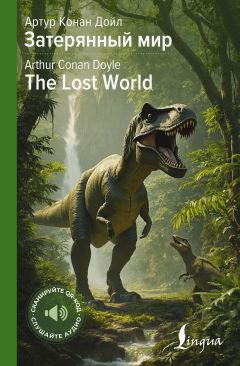
Автор книги: Артур Дойл
Жанр: Иностранные языки, Наука и Образование
Возрастные ограничения: 12+
сообщить о неприемлемом содержимом
“What shall we call the lake?” Challenger asked.
“Why should you not take the chance of using your own name?” said Summerlee, with his usual touch of acidity.
“I trust, sir, I need no such monument,” said Challenger, severely.
“It’s up to you, my friend Malone, to name the lake,” said Lord John. “You saw it first, and if you choose to put ’Lake Malone’ on it, no one has a better right.”
“By all means. Let our young friend give it a name,” said Challenger.
“Then,” said I, blushing, “let it be named Lake Gladys.”
“Don’t you think the Central Lake would be more descriptive?” remarked Summerlee.
“I should prefer Lake Gladys.”
Challenger looked at me and shook his great head in disapproval. “Boys will be boys,” said he. “Lake Gladys let it be.”

Chapter 12
It Was Dreadful In The Forest

I have said that I beamed with pride when three such men as my companions thanked me for having saved the situation. As the youngest of the party I had been overshadowed from the first. And now I was coming into my own. That little glow of self-satisfaction, that added measure of self-confidence, were to lead me on that very night to the most dreadful experience of my life, ending with a shock which turns my heart sick when I think of it.
That is what happened. I had been very excited by the adventure of the tree, and sleep seemed impossible to me. Summerlee was on guard, sitting hunched over our small fire and dozing. The full moon was shining brightly, and the air was cold. What a night for a walk! And then suddenly came the thought, “Why not?” Suppose I made my way down to the central lake, suppose I was back at breakfast with some record of the place… I thought of Gladys, with her “There are heroisms all round us.” I seemed to hear her voice as she said it. I thought also of McArdle. What an article for the paper! What a foundation for a career! I took my rifle, my pockets were full of cartridges, and quickly slipped out.
I had not gone a hundred yards before I deeply regretted my impulsiveness. I have already said that I am not a really brave man, but I have an overpowering fear of seeming afraid. This was the power which now carried me onwards. I simply could not come back with nothing done.
It was dreadful in the forest. The trees grew so thickly and their foliage spread so widely that I could see nothing. I thought of the horrible cry of the iguanodon… that dreadful cry which had echoed through the woods. I thought, too, of that terrible creature. Now I was on its hunting-ground. I stopped, and as I touched my gun my heart leaped within me. It was the shot-gun, not the rifle, which I had taken!
Here, surely, was a most excellent reason for coming back… But again my foolish pride fought that idea. After all, my rifle would probably have been as useless as a shot-gun against such dangers as I might meet. After a little hesitation, I screwed up my courage and continued upon my way, my useless gun under my arm. Soon I discovered once again the brook which was my guide. It was a cheery companion, gurgling and chuckling as it ran. So long as I followed it down I must come to the lake, and so long as I followed it back I must come to the camp.
The woods became thinner, and bushes took the place of the forest. I could make good progress, therefore, and I could see without being seen. I passed close to the pterodactyl swamp, and as I did so, one of these great creatures rose up from somewhere near me and soared into the air. It looked like a flying skeleton against the moon-light. I lay among the bushes as I knew from past experience that with a single cry the creature could bring a hundred of its mates. It took me some time before I continued my journey.
The night had been exceedingly still, but as I walked on I heard a low sound somewhere in front of me. Soon I came upon the source of it, for in the centre of a small clearing I found a lake, or a pool, rather, some black, pitch-like stuff, the surface of which rose and fell in great blisters of bursting gas. The air above it was shimmering with heat. It was clear that the great volcanic outburst which had raised this strange plateau so many years ago had not yet entirely spent its forces. This asphalt pool in the jungle was the first sign that we had of actual existing activity on the slopes of the ancient crater. I had no time to examine it further for I had to hurry if I were to be back in camp in the morning.
In the jungle I crept forward, stopping with a beating heart whenever I heard, as I often did, the crash of breaking branches as some wild beast went past. Now and then great shadows loomed up for an instant and were gone…
At last (my watch showed that it was one in the morning) I saw the gleam of water and ten minutes later I was among the reeds upon the borders of the central lake. I was extremely thirsty, so I lay down and drank its waters, which were fresh and cold. There was a broad pathway with many tracks upon it at the spot which I had found, so that it was clearly one of the drinking-places of the animals. Close to the water’s edge there was a huge isolated block of lava. I climbed it, and, lying on the top, I had an excellent view in every direction.
The first thing which I saw filled me with amazement. When I described the view from the top of the great tree, I said that on the farther cliff I could see a number of dark caves. Now, as I looked up at the same cliffs, I saw light in every direction. For a moment I thought it was the lava-glow; but this could not be so. It was wonderful, but these spots must be the reflection of fires within the caves… fires which could only be lit by the hand of man. There were human beings on the plateau! Here was news indeed for us to bring back with us to London!
For a long time I lay and watched these red lights. It was out of the question for the moment, and yet surely we could not leave the plateau until we found out the truth.
Lake Gladys – my own lake – lay with a reflected moon shining brightly in the centre of it. It was not very deep. Everywhere on the still surface I could see signs of life, sometimes mere rings and ripples in the water, sometimes the gleam of a great silver-sided fish in the air, sometimes the black-coloured back of some monster. I watched two creatures come down to the drinking-place. Then a huge deer, with branching horns, came down with its doe and two fawns and drank beside those two creatures. A minute later the deer gave a warning snort, and was off with its family among the reeds. A new-comer, a most monstrous animal, was coming down the path.
For a moment I wondered where I could have seen it, that arched back with triangular fringes along it, that strange bird-like head held close to the ground. It was the stegosaurus… the very creature which Maple White had drawn in his sketch-book, and which had been the first object which arrested the attention of Challenger! There it was… The ground shook beneath its tremendous weight. For five minutes he was so close to my rock that by stretching out my hand I could have touched its back. Then it walked away and was lost among the trees.
Looking at my watch, I saw that it was half-past two o’clock, and high time that I started on my homeward journey. There was no difficulty about the direction in which I should return as I had the little brook on my left. I set off, therefore, in high spirits, I felt that I had done good work and was bringing back lots of news for my companions. Foremost of all, of course, were the sight of the caves and the certainty that some human race inhabited them. But besides that I could tell them about the central lake. It was full of strange creatures, and I had seen several land forms of primeval life which we had not before come across.
I was thinking it over, when my mind was brought back by a strange noise behind me. It was something between a snore and a growl, low and deep. Some strange creature was evidently near me, but nothing could be seen, so I went faster on my way. After a mile or so suddenly the sound was repeated, still behind me, but louder. My heart stood still within me, whatever it was, must surely be after ME. My skin grew cold and my hair rose at the thought. With my knees shaking beneath me, I stood and glared with starting eyes down the moonlit path which lay behind me. All was quiet as in a dream landscape. Then from out of the silence there came once more that low, far louder and closer breathing than before. There could no longer be a doubt. Something was on my trail, and was closing every minute.
I stood like a man paralyzed. Then suddenly I saw it. The beast moved like a kangaroo, jumping on its powerful hind legs, while its front ones were held bent in front of it. It was of enormous size and power, like an erect elephant. For a moment I hoped that it was an iguanodon, which I knew to be harmless, but I soon saw that this was a very different creature. This beast had a broad, toad-like face like that which had alarmed us in our camp. He was surely one of the great flesh-eating dinosaurs, the most terrible beasts which have ever walked this earth. It was smelling out my trail.
What could I do? I looked desperately round for some rock or tree, but I was in a bushy jungle. I knew that the creature behind me could tear down an ordinary tree as though it were a reed. My only possible chance lay in flight. I saw a well-marked, hard-beaten path which ran across in front of me and I set myself to do such a half-mile as I have never done before or since. My limbs ached, my chest heaved, I felt that my throat would burst for want of air, and yet with that horror behind me I ran and I ran and ran. At last I paused, hardly able to move. For a moment I thought that it had lost my trail. And then suddenly, I heard it. It was at my very heels. I was lost.
With a scream of terror I turned and rushed wildly down the path. Behind me the thick, gasping breathing of the creature sounded louder and louder. And then suddenly there came a crash… I was falling through space, and everything beyond was darkness.
As I came to my senses I felt a most dreadful smell. Putting out my hand in the darkness I came on something which felt like a huge piece of meat and a large bone. Up above me there was a starlit sky, which showed me that I was lying at the bottom of a deep pit. I looked up in terror, expecting to see that dreadful head silhouetted against the sky. There was no sign of the monster, however. I began to walk slowly round, therefore, feeling in every direction to find out what this strange place could be into which I had been so opportunely precipitated.
It was, as I have said, a pit. The atmosphere was poisonous and horrible. Suddenly I came against something hard, and I found that an upright post was firmly fixed in the centre of the hollow. It was so high that I could not reach the top of it with my hand, and it appeared to be covered with grease.
At that moment I remembered that I had a box of matches in my pocket. Striking one of them, I looked around. There could be no question – it was a trap… made by the hand of man. The post in the centre was sharpened at the upper end, and was black with the blood of the creatures who had been impaled on it. I remembered that Challenger had declared that man could not exist on the plateau, but now it was clear enough that they could. In their narrow caves the natives were safe, into which the carnivores could not penetrate. With their developed brains men were capable of setting such traps, covered with branches, which would destroy prehistoric monsters in spite of all their strength and activity. Man was always the master.
I clambered to the edge of the pit and looked over. The stars were fading, the sky was whitening, and the cold wind of morning blew pleasantly upon my face. I could see or hear nothing of my enemy. Slowly I climbed out and sat for a while upon the ground, ready to spring back into my refuge if any danger should appear. Then, reassured by the absolute stillness and by the growing light, I took my courage in both hands and stole back along the path which I had come. Some distance down it I picked up my gun, and shortly afterwards struck the brook which was my guide. So, with a frightened backward glance, I made for home.
And suddenly there came something to remind me of my absent companions. In the clear, still morning air there sounded far away the sharp, hard note of a single rifle-shot. I paused and listened, but there was nothing more. For a moment I was shocked at the thought that some sudden danger might have befallen them. But then a more natural explanation came to my mind. It was now broad daylight. No doubt my absence had been noticed. They had imagined, that I was lost in the woods, and had fired this shot to guide me home. It is true that we had made a strict resolution against firing, but if it seemed to them that I might be in danger they would not hesitate. It was for me now to hurry on as fast as possible, and so to reassure them.
I was very much tired but at last I came into regions which I knew. There was the swamp of the pterodactyls upon my left; there in front of me was the glade of the iguanodons. Now I was in the last belt of trees which separated me from Fort Challenger. My heart sank at that ominous stillness. The refuge rose before me, even as I had left it, but the gate was open. I rushed in. In the cold, morning light it was a fearful sight which met my eyes. Our effects were scattered in wild confusion over the ground; my companions had disappeared, and close to the ashes of our fire the grass was stained with blood.
I was so stunned by this sudden shock that for a time I must have nearly lost my reason. I have a vague recollection, as one remembers a bad dream, of rushing about through the woods all round the empty camp, calling wildly for my companions. No answer came back from the silent shadows. The horrible thought that I might never see them again drove me to desperation. Only now did I realize how I had learned to lean on my companions, on the self-confidence of Challenger, and on the masterful, humorous coolness of Lord John Roxton. Without them I was like a child in the dark, helpless and powerless. I did not know which way to turn or what I should do first.
After a period, during which I sat in bewilderment, I set myself to try and discover what sudden misfortune could have befallen my companions. The whole disordered appearance of the camp showed that there had been some sort of attack, and the rifle-shot no doubt marked the time when it had occurred. That there should have been only one shot showed that it had been all over in an instant. The rifles still lay upon the ground. The blankets of Challenger and of Summerlee beside the fire suggested that they had been asleep at the time. The cases of ammunition and of food were scattered about in a wild litter, together with our unfortunate cameras and plate-carriers, but none of them were missing. On the other hand, all the exposed provisions – and I remembered that there were a considerable quantity of them – were gone. They were animals, then, and not natives, who had made the inroad, for surely the latter would have left nothing behind.
But if animals, or some single terrible animal, then what had become of my comrades? It is true that there was that one pool of blood, which told of violence. The more I tried to think it out with my confused and weary brain the less could I find any plausible explanation. I searched round in the forest, but could see no tracks which could help me to a conclusion.
Suddenly a thought came to me – I was not absolutely alone in the world. Down at the bottom of the cliff, and within call of me, was waiting the faithful Zambo. I went to the edge of the plateau and looked over. Sure enough, he was squatting among his blankets beside his fire in his little camp. But, to my amazement, a second man was seated in front of him. He was an Indian. I shouted loudly and waved my handkerchief. Zambo looked up, waved his hand, and turned to ascend the rock. In a short time he was standing on the edge of it and listening to the story which I told him.
“Devil got them for sure, Massa Malone,” said he. “You got into the devil’s country, and he take you all to himself. You take advice, Massa Malone, and come down quick, else he get you as well.”
“How can I come down, Zambo?”
“You get creepers from trees, Massa Malone. Throw them over here. I make fast to this stump, and so you have bridge.”
“We have thought of that. There are no creepers here which could bear us.”
“Send for ropes, Massa Malone.”
“Who can I send, and where?”
“Send to Indian villages. Plenty hide rope in Indian village. Indian down below; send him.”
“Who is he?
“One of our Indians. He come back to us. Ready now to take letter.”
To take a letter! Why not? Perhaps he might bring help; but in any case he would ensure that our lives were not spent for nothing, and that news of all that we had won for Science should reach our friends at home. I had two completed letters already waiting. I ordered Zambo, therefore, to come again in the evening, and I spent my miserable and lonely day in recording my own adventures of the night before. I also drew up a note, to be given to any white merchant or captain of a steam-boat whom the Indian could find, asking them for ropes, since our lives must depend on it. These documents I threw to Zambo in the evening, and also my purse, which contained three English sovereigns. These were to be given to the Indian, and he was promised twice as much if he returned with the ropes.
So now you will understand, my dear Mr. McArdle, how this communication reaches you, and you will also know the truth, in case you never hear again from your unfortunate correspondent. Tonight I am too tired and too depressed to make my plans. Tomorrow I shall search round for any traces of my unhappy friends.
Chapter 13
A Sight Which I Shall Never Forget

It was quite dark when I at last turned back to our camp, and my last vision as I went was the red gleam of Zambo’s fire, the one point of light in the wide world below. And yet I felt happier, for it was good to think that the world should know what we had done.
Finally, I closed the door of the refuge, lit three separate fires, and having eaten a hearty supper fell asleep. In the early morning, just as day was breaking, a hand was laid on my arm, and with all my nerves strained and my hand feeling for a rifle, I gave a cry of joy as in the cold gray light I saw Lord John Roxton.
It was he… and yet it was not he. He was pale and wild-eyed. His gaunt face was scratched and bloody, his clothes were hanging in rags, and his hat was gone. I stared in amazement, but he gave me no chance for questions. He was grabbing at our stores all the time he spoke.
“Quick, my friend! Quick!” he cried. “Every moment counts. Get the rifles, both of them. I have the other two. Now, all the cartridges you can gather. Fill up your pockets. Now, some food. Half a dozen tins will do. That’s all right! Don’t talk or think. Move on, or we are done!”
Still half-awake, and unable to imagine what it all might mean, I found myself hurrying madly after him through the wood, a rifle under each arm and a pile of various stores in my hands. Finally he came to a dense brush-wood.
“There!” he panted. “I think we are safe here. They’ll find us in the camp. It will be their first idea. But this should puzzle them.”
“What is it all about?” I asked. “Where are the professors? And who is it that is after us?”
“The ape-men,” he cried. “My God, what brutes! Don’t raise your voice, they have long ears… sharp eyes, too, but no power of scent, so far as I could judge, so I don’t think they can smell us out. Where have you been, my friend? You were well out of it.”
In a few sentences I told what I had done.
“Nothing good,” said he, when he had heard of the dinosaur and the pit. “It isn’t quite the place for a rest cure, is it? But I had no idea what this place was until those devils attacked us. The man-eating Papuans had me once, but they are nice compared to this crowd.”
“How did it happen?” I asked.
“It was in the early morning. Our learned friends hadn’t even begun to argue yet. Suddenly apes appeared. They had been hiding in the dark, I suppose. I shot one of them through the belly, but before we knew where we were they had us spread-eagled on our backs. I call them apes, but they carried sticks and stones in their hands and talked to each other, and ended up by tying our hands with creepers, so they are ahead of any beast that I have seen in my wanderings. Ape-men… that’s what they are… Missing Links, and I wish they had stayed missing. They carried off their wounded comrade. They were big fellows, as big as a man and even stronger. Challenger is no chicken, but even he was cowed. He jumped to his feet and yelled and cursed at them like a lunatic.
“Well, what did they do?” I asked.
“I thought it was the end of us, but that is what happened. Suddenly one of them stood out beside Challenger. You’ll smile, my friend, but this old ape-man – he was their chief – was a sort of red Challenger. He had the short body, the big shoulders, the round chest, no neck, a great beard, the ’What do you want, damn you!’ look about the eyes. When the ape-man stood by Challenger and put his paw on his shoulder, the thing was complete. Summerlee laughed till he cried. The ape-men started dragging us through the forest. They didn’t touch the guns and things – they thought them dangerous, I expect – but they carried away all our food. They were careless about Summerlee and I but Challenger was all right. Four of them carried him shoulder high, and he went like a Roman emperor.”
It was a strange clicking noise in the distance.
“There they go!” said my companion. “My friend, we’re not going to be taken alive! That’s the row they make when they are excited. By George! Can you hear them now?”
“Very far away.”
“I think their search parties are all over the wood. Well, I was telling you my tale. They got us soon to this town of theirs… about a thousand huts of branches and leaves near the edge of the cliff. It’s three or four miles from here. Those beasts tied us up and there we lay with our toes up, beneath a tree, while a great brute stood guard over us with a big stick in his hand. When I say ’we’ I mean Summerlee and myself. Old Challenger was eating pineapples and having the time of his life. I should say that he managed to get some fruit to us, and with his own hands he loosened our bonds. If you’d seen him sitting there with his twin brother and singing in that rolling bass of his, because music of any kind seemed to put them in a good humor, you’d have smiled. But we weren’t in mood for laughing, as you can guess.”
“Well, now, young fellah, I’ll tell you what will surprise you. You say you saw signs of men, and fires, traps, and the like. Well, we have seen the natives themselves. They are poor people, down-faced little chaps, and had enough to make them so. It seems that there is bloody war between them and apes all the time. Well, yesterday the ape-men got hold of a dozen of the humans and brought them in as prisoners. The men were little red fellows, and had been bitten and clawed so that they could hardly walk. The ape-men put two of them to death… it was perfectly beastly. Summerlee fainted, and even Challenger had as much as he could stand. I think they are gone, don’t you?”
We listened intently, but nothing except the calling of the birds broke the deep peace of the forest. Lord Roxton went on with his story.
“I think you have had the escape of your life, my friend, you are lucky not to be caught. Well, we had a horrid business afterwards. My God! what a nightmare the whole thing is! You remember the place where we found the skeleton of the American? Well, that is just under ape-town, and that’s the jumping off place of their prisoners. They have a sort of ceremony on the top. One by one the poor creatures have to jump, and the game is to see whether they are merely dashed to pieces or whether they get skewered on the bamboo canes. They took us out to see it, and the whole tribe lined up on the edge. Four of the Indians jumped, and the canes went through them like knitting needles through a pat of butter. No wonder we found that poor Yankee’s skeleton with the canes growing between his ribs. It was horrible… We thought we would be next.
“Well, it wasn’t. Their language is more than half signs, and it was not hard to follow them. So I thought it was time we made a break for it. I had thought out one or two points that were helpful. One was that these brutes could not run as fast as a man in the open. They have short legs, you see, and heavy bodies. Another point was that they knew nothing about guns. I don’t believe they understood how the fellow I shot was hurt. If we could get at our guns there was no saying what we could do. So I broke away early this morning, gave my guard a kick and sprinted for the camp. There I found you and the guns, and here we are.”
“But the professors!” I cried.
“Well, we must just go back and save them. I couldn’t bring them with me. Challenger was up the tree, and Summerlee was not strong enough. The only chance was to get the guns and try a rescue. I don’t think they would touch Challenger, but I wouldn’t answer for Summerlee. So we are to go back and have them out or meet the end with them.”
Lord Roxton was a born leader. His love of danger, his intense appreciation of the drama of an adventure, a fierce game between you and Fate made him a wonderful companion at such hours. If it were not for our fears as to the fate of our companions, it would have been a positive joy to throw myself with such a man into such an affair. We were rising from our brushwood hiding-place when suddenly he gripped my arm.
“By George!” he whispered, “here they come!”
A party of the ape-men was passing. They went close to each other, their hands occasionally touching the ground, their heads turning to left and right as they walked along. Many of them carried sticks, and at the distance they looked like a line of very hairy and deformed human beings. Then they were lost among the bushes.
“Not this time,” said Lord John. “Our best chance is to lie quiet until they have given up the search. Then we shall see whether we can’t get back to their town and hit them where it hurts most. Give them an hour and we’ll march.”
We decided to have breakfast. Lord Roxton had had nothing but some fruit since the morning before and ate like a starving man. Then, at last, our pockets full of cartridges and a rifle in each hand, we started off on our mission of rescue. Lord John gave me some idea of his plans.
“So long as we are among the trees these monsters are our masters”, said he. “They can see us and we cannot see them. But in the open it is different. There we can move faster than they. So we must stick to the open all we can. The edge of the plateau has fewer large trees than further inland. So that’s our line of advance. Go slowly, keep your eyes open and your rifle ready. Come quick! I hope we are not too late already!”
I found myself shaking with nervous excitement as I lay down beside him, looking out through the bushes at a clearing which stretched before us.
It was a sight which I shall never forget until my dying day, so weird, so impossible. I know that it will seem to be some wild nightmare. But it is still fresh in my memory.
In the open, and near the edge of the cliff, there had gathered a crowd of some hundred of these red-haired creatures, many of them of immense size, and all of them horrible to look at. There was a certain discipline among them. In front there stood a small group of Indians… little, red fellows, whose skins glowed like polished bronze in the strong sunlight. A tall, thin white man was standing beside them, his head bowed, his arms folded. There was no mistaking – it was Professor Summerlee.
There were several ape-men, who watched the prisoners closely and made all escape impossible. Then, close to the edge of the cliff, were two figures, so strange, and under other circumstances so ridiculous, that they got my attention. The one was our friend, Professor Challenger. The remains of his coat still hung in strips from his shoulders, but his shirt had been all torn out. He had lost his hat, and his hair was flying in wild disorder. Beside him stood his master, the king of the ape-men. In all things he was, as Lord John had said, the very image of our Professor, except the fact that his colouring was red instead of black. The same short, broad figure, the same heavy shoulders, the same beard on the hairy chest. Only the shape of their skulls was different. At every other point the king was an absurd parody of the Professor.
Two of the ape-men had seized one of the Indians out of the group and dragged him forward to the edge of the cliff. The king raised his hand as a signal. They caught the man by his leg and arm, and swung him three times backwards and forwards with tremendous violence. Then, with a frightful heave they shot the poor Indian over the chasm. As he vanished from sight, the whole assembly, except the guards, rushed forward to the edge of the chasm, and there was a long pause of absolute silence, broken by a mad yell of delight. They sprang about, tossing their long, hairy arms in the air and howling with joy. Then they fell back from the edge and waited for the next victim.
This time it was Summerlee. Two of his guards caught him by the wrists and pulled him brutally to the front. Challenger had turned to the king and waved his hands frantically before him. He was begging and pleading for his comrade’s life. The ape-man pushed him aside and shook his head. At that moment Lord John’s rifle cracked and the king sank down on the ground.
“Shoot into the thick of them! Shoot, sonny, shoot!” cried my companion.