Читать книгу "Секретари. Региональные сети в СССР от Сталина до Брежнева"
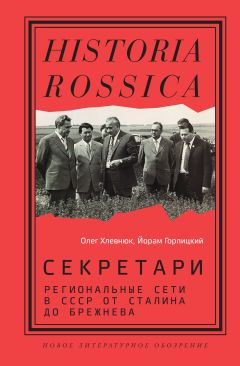
Автор книги: Олег Хлевнюк
Жанр: Публицистика: прочее, Публицистика
Возрастные ограничения: 16+
сообщить о неприемлемом содержимом
Embree G. D. The Soviet Union between the 19th and 20th Party Congresses, 1952–1956. The Hague: Martinus Nijhoff, 1959.
Escribà-Folch A. Repression, Political Threats, and Survival under Autocracy // International Political Science Review. 2013. Vol. 34. № 5. P. 543–560.
Explaining Institutional Change: Ambiguity, Agency, and Power / Ed. by J. Mahoney, K. Thelen. New York: Cambridge University Press, 2010.
Fainsod M. How Russia Is Ruled. Cambridge: Harvard University Press, 1963.
Fainsod M. Smolensk under Soviet Rule. Cambridge: Harvard University Press, 1958.
Fairbanks C. H. Clientelism and Higher Politics in Georgia, 1949–1953 // Transcaucasia: Nationalism and Social Change / Ed. by R. Suny. Ann Arbor: University of Michigan Press, 1983. P. 339–368.
Fairbanks C. H. National Cadres as a Force in the Soviet System: The Evidence of Beria’s Career, 1949–1953 // Soviet Nationality Policies and Practice / Ed. by J. Azrael. New York: Praeger, 1978. P. 144–186.
Filtzer D. Soviet Workers and De-Stalinization: The Consolidation of the Modern System of Soviet Production Relations, 1953–1964. Cambridge: Cambridge University Press, 1992.
Fitzpatrick S. Ascribing Class: The Construction of Social Identity in Soviet Russia // Journal of Modern History. 1993. Vol. 65. № 4. P. 745–770.
Fitzpatrick S. On Stalin’s Team: The Years of Living Dangerously in Soviet Politics. Princeton: Princeton University Press, 2015.
Fitzpatrick S. Postwar Soviet Society: The «Return to Normalcy», 1945–1953 // The Impact of World War II on the Soviet Union / Ed. by S. J. Linz. Totowa, NJ: Rowman and Allanhead, 1985. P. 129–156.
Fitzpatrick S. Stalin and the Making of a New Elite, 1928–1939 // Slavic Review. 1979. Vol. 38. P. 377–402.
Frank P. Constructing a Classified Ranking of CPSU Provincial Committees // British Journal of Political Science. 1974. Vol. 4. № 2. P. 217–230.
Frank P. The CPSU Obkom First Secretary: A Profile // British Journal of Political Science. 1971. Vol. 1. № 1. P. 173–190.
Friedrich C. J., Brzezinski Z. K. Totalitarian Dictatorship and Autocracy. Cambridge: Harvard University Press, 1956.
Fürst J. Stalin’s Last Generation: Post-War Youth and the Emergence of Mature Socialism. Oxford: Oxford University Press, 2010.
Gambetta D. Codes of the Underworld: How Criminals Communicate. Princeton: Princeton University Press, 2009.
Gandhi J. Political Institutions under Dictatorship. New York: Cambridge University Press, 2008.
Gandhi J., Lust-Okar E. Elections under Authoritarianism // Annual Review of Political Science. 2009. Vol. 12. P. 403–422.
Geddes B. Paradigms and Sand Castles: Theory Building and Research Design in Comparative Politics. Ann Arbor: University of Michigan Press, 2003.
Geddes B. What Do We Know about Democratization after Twenty Years? // Annual Review of Political Science. 1999. Vol. 2. P. 115–144.
Geddes B., Wright J., Frantz E. Autocratic Breakdown and Regime Transitions: A New Data Set // Perspectives on Politics. 2014. Vol. 12. № 2. P. 313–331.
Gellner E. Nations and Nationalism. Oxford: Blackwell, 2006.
Gel’man V. The Dynamics of Sub-National Authoritarianism: Russia in Comparative Perspective // The Politics of Sub-National Authoritarianism in Russia / Ed. by V. Gel’man, C. Ross. Surrey: Ashgate, 2010. P. 1–19.
Gel’man V., Ryzhenkov S., Brie M. Making and Breaking Democratic Transitions: The Comparative Politics of Russia’s Regions. Lanham, MD: Rowman and Littlefield, 2003.
Georgia after Stalin: Nationalism and Soviet Power / Ed. by T. K. Blauvelt, J. Smith. Abingdon: Routledge, 2016.
Gervasoni C. A Rentier Theory of Subnational Regimes: Fiscal Federalism, Democracy, and Authoritarianism in the Argentine Provinces // World Politics. 2010. Vol. 62. № 2. P. 302–340.
Getty J. A. Origins of the Great Purges: The Soviet Communist Party Reconsidered, 1933–1938. Cambridge: Cambridge University Press, 1985.
Getty J. A. The Rise and Fall of a Party First Secretary: Vainov of Iaroslavl’ // The Anatomy of Terror: Political Violence under Stalin / Ed. by J. Harris. Oxford: Oxford University Press, 2016. P. 66–84.
Getty J. A. State and Society under Stalin: Constitutions and Elections in the 1930s // Slavic Review. 1991. Vol. 50. № 1. P. 18–35.
Getty J. A., Naumov O. V. The Road to Terror: Stalin and the Self-Destruction of the Bolsheviks, 1932–1939. New Haven: Yale University Press, 1999.
Gibson E. L. Boundary Control: Subnational Authoritarianism in Democratic Countries // World Politics. 2005. Vol. 58. № 1. P. 101–132.
Gibson E. L. Boundary Control: Subnational Authoritarianism in Federal Democracies. New York: Cambridge University Press, 2013.
Gill G. The Origins of the Stalinist Political System. Cambridge: Cambridge University Press, 1990.
Gill G. The Rules of the Communist Party of the Soviet Union. Houndmills; Basingstoke: Macmillan, 1988.
Giraudy A. Democrats and Autocrats: Pathways of Subnational Undemocratic Regime Continuity within Democratic Countries. New York: Oxford University Press, 2015.
Goff K. Nested Nationalism: Making and Unmaking Nations in the Soviet Caucasus. Ithaca, NY: Cornell University Press, 2021.
Gorlizki Y. Anti-Ministerialism and the USSR Ministry of Justice, 1953–56: A Study in Organizational Decline // Europe-Asia Studies. 1996. Vol. 48. № 8. P. 1279–1318.
Gorlizki Y. Governing the Interior: Extraordinary Forms of Rule and the Regional Party Apparatus in the Second World War // Cahiers du monde russe. 2011. Vol. 52. № 2–3. P. 321–340.
Gorlizki Y. Ordinary Stalinism: The Council of Ministers and the Soviet Neo-Patrimonial State, 1945–1953 // Journal of Modern History. 2002. Vol. 74. № 4. P. 699–736.
Gorlizki Y. Party Revivalism and the Death of Stalin // Slavic Review. 1995. Vol. 54. № 1. P. 1–22.
Gorlizki Y. Political Reform and Local Party Interventions under Khrushchev // Reforming Justice in Russia, 1864–1994: Power, Culture and the Limits of Legal Order / Ed. by P. Solomon. New York: M. E. Sharpe, 1997. P. 258–282.
Gorlizki Y. Scandal in Riazan: Networks of Trust and the Social Dynamics of Deception // Kritika. 2013. Vol. 14. № 2. P. 243–278.
Gorlizki Y. Structures of Trust after Stalin // Slavonic and East European Review. 2013. Vol. 91. № 1. P. 119–146.
Gorlizki Y. Too Much Trust: Regional Party Leaders and Local Political Networks under Brezhnev // Slavic Review. 2010. Vol. 69. № 3. P. 676–700.
Goudoever A. P. van. The Limits of Destalinization in the Soviet Union: Political Rehabilitations in the Soviet Union since Stalin. London: Croom Helm, 1986.
Granovetter M. Economic Action and Social Structure: The Problem of Embeddedness // American Journal of Sociology. 1985. № 91. Vol. 3. P. 481–510.
Gregory P. R. Restructuring the Soviet Economic Bureaucracy. Cambridge: Cambridge University Press, 1990.
Greif A. Contract Enforceability and Economic Institutions in Early Trade: The Maghribi Traders’ Coalition // American Economic Review. 1993. Vol. 83. № 3. P. 525–548.
Gronow J. Caviar with Champagne: Common Luxury and the Ideals of the Good Life in Stalin’s Russia. Oxford: Berg, 2003.
Grybkauskas S. Governing the Soviet Union’s National Republics: The Second Secretaries of the Communist Party. New York: Routledge, 2021.
Grybkauskas S. Anti-Soviet Protests and the Localism of the Baltic Republics’ Nomenklatura: Explaining the Interaction // Journal of Baltic Studies. 2018. Vol. 49. № 4. P. 447–462.
Grybkauskas S. The Hunting Club of Petras Griškavičius and the Consolidation of the Lithuanian Nomenklatura // Lithuanian Historical Studies. 2013. № 18. P. 123–145.
Grybkauskas S. Imperializing the Soviet Federation? The Institution of the Second Secretary in the Soviet Republics // Ab Imperio. 2014. № 3. P. 267–292.
Grybkauskas S. The Role of the Second Party Secretary in the «Election of the First»: The Political Mechanism for the Appointment of the Head of Lithuania in 1974 // Kritika. 2013. Vol. 14. № 2. P. 343–366.
Gustafson T. Reform in Soviet Politics: Lessons of Recent Policies on Land and Water. Cambridge: Cambridge University Press, 1981.
Hadenius A., Teorell J. Pathways from Authoritarianism // Journal of Democracy. 2007. Vol. 18. № 1. P. 143–156.
Hale H. E. Why Not Parties in Russia? Democracy, Federalism, and the State. New York: Cambridge University Press, 2006.
Hammer D. P. The Dilemma of Party Growth // Problems of Communism. 1970. Vol. 20. № 4. P. 16–21.
Hardin R. Trust and Trustworthiness. New York: Russell Sage, 2002.
Hardy J. S. The Gulag after Stalin: Redefining Punishment in Khrushchev’s Soviet Union, 1953–1964. Ithaca: Cornell University Press, 2016.
Harris J. R. The Great Urals: Regionalism and the Evolution of the Soviet System. Ithaca: Cornell University Press, 1999.
Harrison M. Forging Success: Soviet Managers and Accounting Fraud, 1943–1962 // Journal of Comparative Economics. 2011. Vol. 39. № 1. P. 43–64.
Harrison M. One Day We Will Live without Fear: Everyday Lives under the Soviet Police State. Stanford: Hoover Institution Press, 2016.
Harrison M. Secret Leviathan: Secrecy and State Capacity under Soviet Communism. Stanford: Hoover Institution and Stanford University Press, 2023.
Hasanli J. At the Dawn of the Cold War: The Soviet-American Crisis over Iranian Azerbaijan, 1941–1946. Lanham, MD: Rowman and Littlefield, 2006.
Hasanli J. Khrushchev’s Thaw and National Identity in Soviet Azerbaijan, 1954–1959. Lanham, MD: Rowman and Littlefield, 2015.
Hauslohner P. Politics before Gorbachev: De-Stalinization and the Roots of Reform // Politics, Society and Nationality inside Gorbachev’s Russia / Ed. by S. Bialer. Boulder: Westview, 1987. P. 41–90.
Hauslohner P. Prefects as Senators: Soviet Regional Politicians Look to Foreign Policy // World Politics. 1980. Vol. 33. № 1. P. 197–233.
Heinzen J. A «Campaign Spasm»: Graft and the Limits of the «Campaign» against Bribery after the Great Patriotic War // Late Stalinist Russia: Society between Reconstruction and Reinvention / Ed. by J. Fürst. Abingdon: Routledge, 2006. P. 123–141.
Hill R. J. Soviet Political Elites: The Case of Tiraspol. London: Martin Robertson, 1977.
Hodnett G. The Debate over Soviet Federalism // Soviet Studies. 1967. Vol. 18. № 4. P. 458–481.
Hodnett G. Leadership in the Soviet Republics: A Quantitative Study of Recruitment Policy. Oakville, Ontario: Mosaic Press, 1978.
Hodnett G. The Obkom First Secretaries // Slavic Review. 1965. Vol. 24. № 4. P. 636–652.
Hodnett G., Ogareff V. Leaders of the Soviet Republics 1955–1972: A Guide to Posts and Occupants. Canberra: Australian National University, 1973.
Hooper C. A Darker «Big Deal»: Concealing Party Crimes in the Post-Second World War Era // Late Stalinist Russia: Society between Reconstruction and Reinvention / Ed. by J. Fürst. Abingdon: Routledge, 2006. P. 142–163.
Hornsby R. Protest, Reform and Repression in Khrushchev’s Soviet Union. Cambridge: Cambridge University Press, 2013.
Hosking G. Patronage and the Russian State // Slavonic and East European Review. 2000. Vol. 78. № 2. P. 301–320.
Hough J. F. The Soviet Prefects: The Local Party Organs in Industrial Decision-Making. Cambridge: Harvard University Press, 1969.
Hroch M. Social Preconditions of National Revival in Europe: A Comparative Analysis of the Social Composition of Patriotic Groups among the Smaller European Nations. Cambridge: Cambridge University Press, 1985.
Hughes J., John P. Local Elites in Russia’s Transition: Generation Effects on Adaptation and Competition // Elites and Democratic Development in Russia / Ed. by A. Steen, V. Gelman. London: Routledge, 2003. P. 124–147.
Huntington S. P. Social and Institutional Dynamics of One-Party Systems // Authoritarian Politics in Modern Society: The Dynamics of Established One-Party Systems / Ed. by S. Huntington, C. Moore. New York: Basic Books, 1970. P. 3–47.
Huntington S. P. The Third Wave: Democratization in the Late Twentieth Century. Norman: University of Oklahoma Press, 1993.
Ironside K. A Full-Value Ruble. The Promise of Prosperity in the Postwar Soviet Union. Cambridge, MA: Harvard University Press, 2021.
Jackson R. H., Rosberg C. G. Personal Rule in Black Africa: Prince, Autocrat, Prophet, Tyrant. Berkeley: University of California Press, 1982.
Jensen M. C., Meckling W. H. Theory of the Firm: Managerial Behavior, Agency Costs and Ownership Structure // Journal of Financial Economics. 1976. Vol. 3. № 4. P. 305–360.
Jones J. W. Everyday Life and the «Reconstruction» of Soviet Russia during and after the Great Patriotic War, 1943–1948. Bloomington, IN: Slavica, 2008.
Jones P. From the Secret Speech to the Burial of Stalin: Real and Ideal Responses to De-Stalinization // The Dilemmas of De-Stalinization: Negotiating Cultural and Social Change in the Khrushchev Era / Ed. by P. Jones. Abingdon: Routledge, 2006. P. 41–63.
Jones P. Introduction: the Dilemmas of De-Stalinization // The Dilemmas of De-Stalinization: Negotiating Cultural and Social Change in the Khrushchev Era / Ed. by P. Jones. Abingdon: Routledge, 2006. P. 1–18.
Jozsa G. Political Seilschaften in the USSR // Leadership Selection and Patron-Client Relations in the USSR and Yugoslavia / Ed. by T. H. Rigby, B. Harasymiw. Hemel Hempstead: Allen and Unwin, 1983. P. 139–173.
Kaiser C. P. «A Kind of Silent Protest»? Deciphering Georgia’s 1956 // Georgia after Stalin: Nationalism and Soviet Power / Ed. by T. K. Blauvelt, J. Smith. Abingdon: Routledge, 2016. P. 92–115.
Kaiser C. P. Georgian and Soviet: Entitled Nationhood and the Specter of Stalin in the Caucasus. Ithaca and London: Cornell University Press, 2022.
Kaplan C. S. The Impact of World War II on the Party // The Impact of World War II on the Soviet Union / Ed. by S. Linz. Totowa, NJ: Rowman and Allanheld, 1985. P. 157–187.
Kassof A. The Administered Society: Totalitarianism without Terror // World Politics. 1964. Vol. 16. № 4. P. 558–575.
Kelly C. «The Leningrad Affair»: Remembering the «Communist Alternative» in the Second Capital // Slavonica. 2011. Vol. 17. № 2. P. 103–122.
Kelly C. Refining Russia: Advice Literature, Polite Culture, and Gender from Catherine to Yeltsin. Oxford: Oxford University Press, 2001.
Kelly C. St. Petersburg: Shadows of the Past. New Haven: Yale University Press, 2014.
Kemoklidze N. Georgian-Abkhaz Relations in the post-Stalin Era // Georgia after Stalin: Nationalism and Soviet Power / Ed. by T. K. Blauvelt, J. Smith. Abingdon: Routledge, 2016. P. 129–145.
Kharkhordin O. The Collective and the Individual in Russia: A Study in Practices. Berkeley: University of California Press, 1999.
Khlevniuk O. Kremlin – Tbilisi: Purges, Control and Georgian Nationalism in the first half of the 1950s // Georgia after Stalin: Nationalism and Soviet Power / Ed. by T. K. Blauvelt, J. Smith. Abingdon: Routledge, 2016. P. 13–31.
Khlevniuk O. Decentralizing Dictatorship: Soviet Local Governance during World War II // Russian Review. 2018. Vol. 77. № 2. P. 470–484.
Khlevniuk O. The Economy of Illusions: The Phenomenon of Data-Inflation in the Khrushchev Era // Khrushchev in the Kremlin: Policy and Government in the Soviet Union, 1953–1964 / Ed. by J. Smith, M. Ilic. Abingdon: Routledge, 2011. P. 171–189.
Khlevniuk O. V. Top Down vs. Bottom-up: Regarding the Potential of Contemporary «Revisionism» // Cahiers du monde russe. 2015. Vol. 56. № 4. P. 837–857.
Kibita N. De-Stalinizing Economic Administration: The Alternative Version in Ukraine (1953–1965) // De-Stalinization Reconsidered: Persistence and Change in the Soviet Union / Ed. by T. M. Bohn, R. Einax, M. Abesser. Frankfurt: Campus Verlag, 2014. P. 161–173.
Kibita N. Moscow-Kiev Relations and the Sovnarkhoz Reform // Khrushchev in the Kremlin: Policy and Government in the Soviet Union, 1953–1964 / Ed. by J. Smith, M. Ilic. Abingdon: Routledge, 2011. P. 94–111.
Kibita N. Soviet Economic Management under Khrushchev. The Sovnarkhoz Reform. Abingdon: Routledge, 2013.
Kldiashvili G. Nationalism after the March 1956 Events and the Origins of the National-Independence Movement in Georgia // Georgia after Stalin: Nationalism and Soviet Power / Ed. by T. K. Blauvelt, J. Smith. Abingdon: Routledge, 2016. P. 77–91.
Knight J. Institutions and Social Conflict. Cambridge: Cambridge University Press, 1992.
Knoke D. Political Networks: The Structural Perspective. New York: Cambridge University Press, 1990.
Kornai J. The Economics of Shortage. Amsterdam: North Holland, 1980.
Kornai J. The Socialist System: The Political Economy of Communism. Princeton: Princeton University Press, 1992.
Kotkin S. Armageddon Averted: The Soviet Collapse 1970–2000. New York: Oxford University Press, 2008.
Kotkin S. Magnetic Mountain: Stalinism as a Civilization. Berkeley: University of California Press, 1995.
Laffont J.‐J., Martimort D. The Theory of Incentives: The Principal-Agent Model. Princeton: Princeton University Press, 2002.
Leadership Selection and Patron-Client Relations in the USSR and Yugoslavia / Ed. by T. H. Rigby, B. Harasymiw. London: George Allen, 1983.
Ledeneva A. V. The Genealogy of Krugovaia Poruka: Forced Trust as a Feature of Russian Political Culture // Trust and Democratic Transition in Post-Communist Europe / Ed. by I. Markova. Oxford: Oxford University Press, 2004. P. 85–108.
Ledeneva A. V. How Russia Really Works: The Informal Practices that Shaped Post-Soviet Politics and Business. Ithaca: Cornell University Press, 2006.
Ledeneva A. V. Russia’s Economy of Favours: Blat, Networking and Informal Exchange. Cambridge: Cambridge University Press, 1998.
Leonhard W. The Kremlin since Stalin. Oxford: Oxford University Press, 1962.
Levitsky S. R., Way L. A. Beyond Patronage: Violent Struggle, Ruling Party Cohesion, and Authoritarian Durability // Perspectives on Politics. 2012. Vol. 10. № 4. P. 869–889.
Levitsky S. R., Way L. A. Competitive Authoritarianism: Hybrid Regimes after the Cold War. Cambridge: Cambridge University Press, 2010.
Levitsky S. R., Way L. A. Not Just What, But When (and How): Comparative-Historical Approaches to Authoritarian Durability // Advances in Comparative-Historical Analysis / Ed. by J. Mahoney, K. Thelen. New York: Cambridge University Press, 2015. P. 97–120.
Levitsky S. R., Way L. A. The Rise of Competitive Authoritarianism // Journal of Democracy. 2002. Vol. 13. № 2. P. 51–65.
Levitsky S. R., Way L. A. Revolution and Dictatorship: The Violent Origins of Durable Authoritarianism. Princeton: Princeton University Press, 2022.
Lewin M. Rebuilding the Soviet Nomenklatura, 1945–1948 // Cahiers du monde russe. 2003. Vol. 44. № 2–3. P. 219–252.
Lietuviškoji nomenklatura 1956–1990 metais: tarp sovietinės sistemos ir neformalių praktikų / Sudarė S. Grybkauskas. Vilnius: Aukso žuvys, 2015.
Linden C. A. Khrushchev and the Soviet Leadership: With an Epilogue on Gorbachev. Baltimore: Johns Hopkins University Press, 1990.
Linz J. J. Totalitarian and Authoritarian Regimes. Boulder: Lynne Rienner, 2000.
Loader M. Beria and Khrushchev: The Power Struggle over Nationality Policy and the Case of Latvia // Europe-Asia Studies. 2016. Vol. 68. № 10. P. 1759–1792.
Loader M. Khrushchev’s Thaw in Soviet Latvia: National Politics 1953–1961. Ph. D. diss., King’s College, London, 2015.
Lovell S. The Shadow of War: Russia and the USSR, 1941 to the Present. Chichester: Wiley Blackwell, 2010.
Luhmann N. Familiarity, Confidence, Trust: Problems and Alternatives // Trust: Making and Breaking Cooperative Relations / Ed. by D. Gambetta. Oxford: Basil Blackwell, 1988. P. 94–107.
Magaloni B. Credible Power-Sharing and the Longevity of Authoritarian Rule // Comparative Political Studies. 2008. Vol. 41. № 4–5. P. 715–741.
Magaloni B. Voting for Autocracy: Hegemonic Party Survival and Its Demise in Mexico. New York: Cambridge University Press, 2006.
Magaloni B., Kricheli R. Political Order and One-Party Rule // Annual Review of Political Science. 2010. № 13. P. 123–143.
Mahoney J., Thelen K. A Theory of Gradual Institutional Change // Explaining Institutional Change: Ambiguity, Agency, and Power / Ed. by J. Mahoney, K. Thelen. New York: Cambridge University Press, 2010. P. 1–37.
Markevich A., Zhuravskaya E. M-form Hierarchy with Poorly-Diversified Divisions: A Case of Khrushchev’s Reform in Soviet Russia // Journal of Public Economics. 2011. Vol. 95. № 11–12. P. 1550–1560.
McAuley M. Hunting the Hierarchy: RSFSR Obkom Secretaries and the Central Committee // Soviet Studies. 1974. Vol. 26. № 4. P. 473–501.
McCormick J. P. From Constitutional Technique to Caesarist Ploy: Carl Schmitt on Dictatorship, Liberalism, and Emergency Powers // Dictatorship in History and Theory: Bonapartism, Caesarism, and Totalitarianism / Ed. by P. Baehr, M. Richter. Cambridge: Cambridge University Press, 2004. P. 197–219.
Merl S. Political Communication under Khrushchev: Did the Basic Modes Really Change after Stalin’s Death? // De-Stalinization Reconsidered: Persistence and Change in the Soviet Union / Ed. by T. M. Bohn, R. Einax, M. Abesser. Frankfurt: Campus Verlag, 2014. P. 65–82.
Meyerzon S. The Center versus Its Periphery: Nikita Khrushchev, Dinmukhamed Kunaev, and the Emergence of the Kazakh Political Elite, 1953–1971. M. A. thesis, Harvard University, 2004.
Millar J. R. The Little Deal: Brezhnev’s Contribution to Acquisitive Socialism // Slavic Review. 1985. Vol. 44. № 4. P. 694–706.
Miller J. H. Cadres Policy in Nationality Areas: Recruitment of CPSU First and Second Secretaries in Non-Russian Republics of the USSR // Soviet Studies. 1977. Vol. 29. № 1. P. 3–36.
Miller J. H. Nomenklatura: A Check on Localism? // Leadership Selection and Patron-Client Relations in the USSR and Yugoslavia / Ed. by T. H. Rigby, B. Harasymiw. London: George Allen, 1983. P. 15–61.
Miller R. F. Khrushchev and the Soviet Economy: Management by Re-Organization // Khrushchev and the Communist World / Ed. by R. F. Miller, F. Feher. London: Croom Helm, 1984. P. 108–138.
Mirrlees J. A. The Optimal Structure of Incentives and Authority within an Organization // Bell Journal of Economics. 1976. Vol. 7. № 1. P. 105–131.
Mitrokhin N. The Rise of Political Clans in the Era of Nikita Khrushchev: The First Phase, 1953–1959 // Khrushchev in the Kremlin: Policy and Government in the Soviet Union, 1953–1964 / Ed. by J. Smith, M. Ilic. Abingdon: Routledge, 2011. P. 26–40.
Moe T. The New Economics of Organization // American Journal of Political Science. 1984. Vol. 28. № 4. P. 739–777.
Moe T. Power and Political Institutions // Perspectives on Politics. 2005. Vol. 3. № 2. P. 215–233.
Moore B. Social Origins of Dictatorship and Democracy: Lord and Peasant in the Modern World. London: Allen Lane, 1967.
Moore B. Soviet Politics. The Dilemma of Power. Cambridge: Harvard University Press, 1950.
Morse Y. L. The Era of Electoral Authoritarianism // World Politics. 2012. Vol. 64. № 1. P. 161–198.
Moscow and the Non-Russian Republics in the Soviet Union / Ed. by L. Bennich-Björkman, S. Grybkauskas. New York: Routledge, 2022.
Moses J. C. The Impact of Nomenklatura in Soviet Regional Recruitment // Soviet Union. 1981. Vol. 8. № 1. P. 62–102.
Moses J. C. Regional Cohorts and Political Mobility in the USSR: The Case of Dnepropetrovsk // Soviet Union. 1976. Vol. 3. № 1. P. 63–91.
Moses J. C. Regional Party Leadership and Policy-Making in the USSR. New York: Praeger, 1974.
Moses J. C. Regionalism in Soviet Politics: Continuity as a Source of Change, 1953–1982 // Soviet Studies. 1985. Vol. 37. № 2. P. 184–211.
Moses J. C. Who Has Led Russia? Russian Regional Political Elites, 1954–2006 // Europe-Asia Studies. 2008. Vol. 60. № 1. P. 1–24.
Myerson R. B. The Autocrat’s Credibility Problem and Foundations of the Constitutional State // American Political Science Review. 2008. Vol. 102. № 1. P. 125–139.
Nicolet C. Dictatorship in Rome // Dictatorship in History and Theory: Bonapartism, Caesarism, and Totalitarianism / Ed. by P. Baehr, M. Richter. Cambridge: Cambridge University Press, 2004. P. 263–278.
North D. C. Institutions, Institutional Change and Economic Performance. New York: Cambridge University Press, 1990.
Nove A. An Economic History of the USSR. Reading, UK: Pelican, 1989.
Oliver J. H. Turnover and Family Circles in Soviet Administration // Slavic Review. 1973. Vol. 32. № 3. P. 527–545.
Olson M. Dictatorship, Democracy, and Development // American Political Science Review. 1993. Vol. 87. № 3. P. 567–576.
Olson M. Power and Prosperity: Outgrowing Communist and Capitalist Dictatorships. New York: Basic Books, 2000.
Pethybridge R. W. A Key to Soviet Politics: The Crisis of the «Anti-Party» Group. London: George Allen and Unwin, 1962.
Pierson P. Politics in Time: History, Institutions, and Social Analysis. Princeton: Princeton University Press, 2004.
Poe S. C., Tate C. N. Repression of Human Rights to Personal Integrity in the 1980s: A Global Analysis // American Political Science Review. 1994. Vol. 88. № 4. P. 853–872.
Poe S. C., Tate C. N., Keith L. C. Repression of the Human Right to Personal Integrity Revisited: A Global Cross-National Study Covering the Years 1976–1993 // International Studies Quarterly. 1999. Vol. 43. № 2. P. 291–313.
Prigge W. D. Bearslayers: The Rise and Fall of the Latvian National Communists. New York: Peter Lang, 2015.
Provincial Landscapes: Local Dimensions of Soviet Power, 1917–1953 / Ed. by D. J. Raleigh. Pittsburgh: University of Pittsburgh Press, 2001.
Przeworski A., Alvarez M. E., Cheibub J. A., Limongi F. Democracy and Development: Political Institutions and Well-Being in the World, 1950–1990. New York: Cambridge University Press, 2000.
Rakowska-Harmstone T. The Dialectics of Nationalism in the USSR // Problems of Communism. 1972. Vol. 23. № 3. P. 1–22.
Rauch J. Business and Social Networks in International Trade // Journal of Economic Literature. 2001. Vol. 39. № 4. P. 1177–1203.
Reid S. Cold War in the Kitchen: Gender and the De-Stalinization of Consumer Taste in the Soviet Union under Khrushchev // Slavic Review. 2002. Vol. 61. № 2. P. 211–252.
Reisinger W. M., Willerton Jr. J. P. Elite Mobility in the Locales: Towards a Modified Patronage Model // Elites and Political Power in the USSR. Ed. by D. Lane. Aldershot: Edward Elgar, 1988. P. 99–126.
The Relaunch of the Soviet Project, 1945–1964 / Ed. by J. Fürst, P. Jones, S. Morrisey // Slavonic and East European Review. 2008. Vol. 86. № 2. P. 201–394.
Reuter O. J., Gandhi J. Economic Performance and Elite Defection from Hegemonic Parties // British Journal of Political Science. 2010. Vol. 41. № 1. P. 83–110.
Reuter O. J., Robertson G. B. Subnational Appointments in Authoritarian Regimes: Evidence from Russian Gubernatorial Appointments // Journal of Politics. 2012. Vol. 74. № 6. P. 1023–1037.
Rigby T. H. Communist Party Membership in the USSR. Princeton: Princeton University Press, 1968.
Rigby T. H. Early Provincial Cliques and the Rise of Stalin // Soviet Studies. 1981. Vol. 33. № 1. P. 3–28.
Rigby T. H. How the Obkom Secretary Was Tempered // Problems of Communism. 1980. Vol. 29. № 3. P. 57–63.
Rigby T. H. Introduction // Leadership Selection and Patron-Client Relations in the USSR and Yugoslavia / Ed. by T. H. Rigby, B. Harasymiw. London: George Allen, 1983. P. 1–11.
Rigby T. H. Khrushchev and the Rules of the Game // Khrushchev and the Communist World / Ed. by R. F. Miller, F. Feher. London: Croom Helm, 1984. P. 39–81.
Rigby T. H. The Need for Comparative Research on Clientelism: Concluding Comments // Studies in Comparative Communism. 1979. Vol. 12. № 2–3. P. 204–211.
Rigby T. H. Political Elites in the USSR: Central Leaders and Local Cadres from Lenin to Gorbachev. Aldershot: Edward Elgar, 1990.
Rigby T. H. The Selection of Leading Personnel in the Soviet State and Communist Party. Ph. D. diss., University of London, 1954. (Главы 7 и 8 перепечатаны как: The Nomenklatura and Patronage under Stalin // Rigby T. H. Political Elites in the USSR: Central Leaders and Local Cadres from Lenin to Gorbachev. Aldershot: Edward Elgar, 1990. P. 94–126.)
Rigby T. H. Soviet Communist Party Membership under Brezhnev // Soviet Studies. 1976. Vol. 28. № 3. P. 317–337.
Rigby T. H. The Soviet Leadership: Towards a Self-Stabilizing Oligarchy? // Soviet Studies. 1970. Vol. 22. № 2. P. 167–191.
Rigby T. H. The Soviet Politburo: A Comparative Profile, 1951–1971 // Soviet Studies. 1972. Vol. 24. № 1. P. 3–23.
Rigby T. H. The Soviet Regional Leadership: The Brezhnev Generation // Slavic Review. 1978. Vol. 37. № 1. P. 1–24.
Roeder P. G. Red Sunset: The Failure of Soviet Politics. Princeton: Princeton University Press, 1993.
Rosenberg H. Bureaucracy, Aristocracy, and Autocracy: The Prussian Experience, 1660–1815. Boston: Beacon Press, 1958.
Ross S. A. The Economic Theory of Agency: The Principal’s Problem // American Economic Review. 1973. Vol. 63. № 2. P. 134–139.
Roth G. Personal Rulership, Patrimonialism, and Empire-Building in the New States // World Politics. 1968. Vol. 20. № 2. P. 194–206.
Rush M. The Rise of Khrushchev. Washington, DC: Public Affairs Press, 1958.
Rutland P. The Politics of Economic Stagnation in the Soviet Union: The Role of Local Party Organs in Economic Management. Cambridge: Cambridge University Press, 1993.
Saller R. P. Personal Patronage under the Early Empire. Cambridge: Cambridge University Press, 1982.
Schattenberg S. Trust, Care, and Familiarity in the Politburo: Brezhnev’s Scenario of Power // Kritika. 2015. Vol. 16. № 4. P. 835–858.
Schedler A. The Politics of Uncertainty: Sustaining and Subverting Electoral Authoritarianism. Oxford: Oxford University Press, 2013.
Schelling T. C. The Strategy of Conflict. Cambridge: Harvard University Press, 1960.
Schull J. The Self-Destruction of Soviet Ideology // Beyond Sovietology: Essays in Politics and History / Ed. by S. Solomon. Armonk, NY: M. E. Sharpe, 1993. P. 8–22.
Schull J. What Is Ideology? Theoretical Problems and Lessons from Soviet-Type Societies // Political Studies. 1992. Vol. 40. № 4. P. 728–741.
Scott J. Social Network Analysis. Thousand Oaks, CA: Sage, 2000.
Simon G. Nationalism and Policy Toward the Nationalities in the Soviet Union: From Totalitarian Dictatorship to Post-Stalinist Society. Boulder: Westview, 1991.