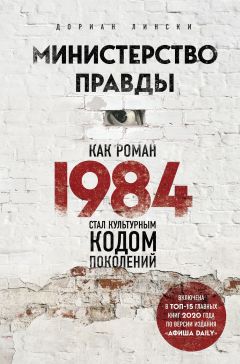
Автор книги: Дориан Лински
Жанр: Культурология, Наука и Образование
Возрастные ограничения: 16+
сообщить о неприемлемом содержимом
14 “I never explained” – Shane, p. 92.
15 “mathematically infallible happiness” – Zamyatin, We, p. 3. Замятин Е. Мы. – М.: АСТ, 2018.
16 “Every station bookstall” – Brian Moynahan, Comrades 1917: Russia in Revolution (Little, Brown, 1992), p. 5.
17 “like a machine” – Ibid., p. 119.
18 “ancient sickness” – Ibid., p. 67.
19 “a rather weak and episodic plot” – Orwell, “Freedom and Happiness”, CW XVIII, 2841, p. 14.
20 “machine-equal” – Zamyatin, We, p. 158. Замятин Е. Мы. – М.: АСТ, 2018.
21 “Because reason should win” – Ibid., p. 203.
22 “one of the literary curiosities” – Orwell, “Freedom and Happiness”, CW XVIII, 2841, p. 13.
23 “Perhaps the most interesting” – Yevgeny Zamyatin, “Autobiography” (1922), in Soviet Heretic, p. 4. Замятин Е. Собрание сочинений: В 5 т. Т. 4. Беседы еретика. – М.: Дмитрий Сечин, Республика, 2010.
24 “Gogol was a friend” – Zamyatin, “Autobiography” (1924), in Soviet Heretic, p. 5.
25 “He also finished” – Zamyatin, “Autobiography” (1929), in Soviet Heretic, p. 9.
26 “an eternal rebel” – Gleb Struve, 25 Years of Soviet Russian Literature (1918–1943) (George Routledge & Sons, Ltd., 1944), p. 22.
27 “In those years” – Zamyatin, “Autobiography” (1929), in Soviet Heretic, p. 10. Замятин Е. Собрание со чин ений: В 5 т. Т. 4. Беседы еретика. – М.: Дмитрий Сечин, Республика, 2010.
28 “If I have any place” – Zamyatin, “Autobiography” (1922), in Soviet Heretic, p. 4.
29 “When the smoke” – Zamyatin, “Moscow – Petersburg” (1933), in Soviet Heretic, p. 144. Замятин Е. Собрание сочинений: В 5 т. Т. 4. Беседы еретика. – М.: Дмитрий Сечин, Республика, 2010.
30 “Yesterday, the thesis” – Zamyatin, “Tomorrow” (1919), in Soviet Heretic, p. 51.
31 “Eternal dissatisfaction” – Ibid.
32 “works only for the distant future” – Zamyatin, “Scythians?” (1918), in Soviet Heretic, p. 22. Замятин Е. Собрание сочинений: В 5 т. Т. 4. Беседы еретика. – М.: Дмитрий Сечин, Республика, 2010.
33 “a kind of unofficial minister” – Zamyatin, “Maxim Gorky” (1936), in Soviet Heretic, p. 250. Замятин Е. Собрание сочинений: В 5 т. Т. 3. Лица. – М.: Русская книга, 2004.
34 “The writer who cannot” – Zamyatin, “I Am Afraid” (1921), in Soviet Heretic, p. 57. Замятин Е. Собрание сочинений: В 5 т. Т. 3. Лица. – М.: Русская книга, 2004.
35 “You really do have to be an acrobat” – Quoted in Martin Amis, Koba the Dread (Vintage, 2003), p. 168.
36 “True literature” – Zamyatin, “I Am Afraid” (1921), in Soviet Heretic, p. 57. Замятин Е. Собрание сочинений: В 5 т. Т. 3. Лица. – М.: Русская книга, 2004.
37 “amenable, quick-witted” – Martha Weitzel Hickey, The Writer in Petrograd and the House of Arts (Northwestern University Press, 2009), p. 137.
38 “mechanical, chemical” – Zamyatin, “H. G. Wells” (1922), in Soviet Heretic, p. 259. «Замятин Е. Собрание сочинений: В 5 т. Т. 4. Беседы еретика. – М.: Дмитрий Сечин, Республика, 2010.
39 “Most of his social fantasies” – Ibid., p. 287.
40 “We, by the author of this essay” – Ibid., p. 290.
41 “a poor conventional creature” – Orwell, “Freedom and Happiness”, CW XVIII, 2841, pp. 14–15.
42 “strange and irritating” – Zamyatin, We, p. 8. Замятин Е. Мы. – М.: АСТ, 2018.
43 “wanted someone, anyone” – Ibid., p. 187.
44 “the choice for mankind” – Orwell, CW IX, p. 275.
45 “stone wall” – Fyodor Dostoyevsky, Notes from Underground and The Double (Penguin, 2009), p. 12. Достоевский Ф. М. Записки из подполья: Повесть. – СПб.: Азбука-классика, 2008. 256 с.
46 “After twice two is four” – Ibid., p. 32.
47 “Freedom is the freedom to say” – Orwell, CW IX, p. 84.
48 “It is this intuitive grasp” – Orwell, “Freedom and Happiness”, CW XVIII, 2841, p. 15.
49 “seems to me to form” – Orwell letter to Warburg, March 30, 1949, CW XIX, 3583, p. 72.
50 “the monster” – Ayn Rand, Anthem (Cassell & Company, 1938), p. 134. Рэнд А. Гимн / пер. Д. В. Костыгин. – М.: Альпина Паблишер, 2019. 112 с.
51 “a world of the future” – Robert Mayhew (ed.), Essays on Ayn Rand’s Anthem (Lexington Books, 2005), p. 119.
52 “a grisly forecast” – Ibid., p. 56.
53 “It is so very personally mine” – Ibid., p. 24.
54 “To be free” – Rand, p. 141. Рэнд А. Гимн / пер. Д. В. Костыгин. – М.: Альпи на Паблишер, 2019. 112 с.
55 “Work hard, increase production” – THX 1138 (dir. George Lucas), 1971.
56 “the way I see LA right now” and “It’s the idea that we are all living in cages” – Quoted in John Baxter, George Lucas: A Biography (HarperCollins, 1999), p. 104.
57 “the genius of Ayn Rand” – Sleevenotes, Rush, 2112 (Anthem Records, 1976).
58 “any collectivist mentality” – J. Kordosh, “Rush. But Why Are They in Such a Hurry?”, Creem, June 1981.
59 “Each morning” – Zamyatin, We, pp. 12–13. Замятин Е. Мы. – М.: АСТ, 2018.
60 “give readers the impression” – Mayhew (ed.), p. 26.
61 “Look at all these things” – The Lego Movie (dir. Phil Lord and Christopher Miller, 2014).
62 “It is important” – Gleb Struve letter to Tribune, January 25, 1946, CW XVIII, 2841, p. 16.
63 “This novel is a warning” – Les Nouvelles littiraires, no. 497, April 23, 1932.
64 “if the Church told me” – Quoted in D. J. Richards, Zamyatin: A Soviet Heretic (Bowes & Bowes, 1962), p. 43.
65 “Zamyatin simply could not” – Hillegas, p. 105.
66 “The collective ‘We’ ” – Mayhew (ed.), p. 139.
67 “But, I-330” – Zamyatin, We, p. 153. Замятин Е. Мы. – М.: АСТ, 2018.
68 “hopelessly bad” – Shane, p. 27.
69 “ridiculing and humiliating” – Ibid., p. 59.
70 “certain themes cannot” – Orwell, “The Prevention of Literature”, Polemic, January 1946, CW XVII, 2792, p. 378.
71 “They all merge” – Zamyatin, “Paradise” (1921), in Soviet Heretic, p. 65. Замятин Е. Собрание сочинений: В 5 т. Т. 4. Беседы еретика. – М.: Дмитрий Сечин, Республика, 2010.
72 “Everything was levelled” – Zamyatin, “Moscow-Petersburg”, in Soviet Heretic, p. 153. Замятин Е. Собрание сочинений: В 5 т. Т. 4. Беседы еретика. – М.: Дмитрий Сечин, Республика, 2010.
73 “In the old days” – Victor Serge, Memoirs of a Revolutionary (NYRB, 2012), p. 308.
74 “the first year” – Arendt, The Origins of Totalitarianism, p. 537. Арендт Х. Истоки тоталитаризма. – М.: ЦентрКом, 1996.
75 “voted whatever was required” – Serge, p. 308.
76 “Facts are stubborn” – Quoted in Max Eastman, Artists in Uniform (G. Allen & Unwin, 1934), p. 87.
77 “Zamyatin’s crime” – Ibid., p. 85.
78 “a mean libel” – Struve, p. 130.
79 “it becomes possible” – Zamyatin, “Letter to Stalin”, in Soviet Heretic, p. 308. Замя тин Е. И. Сочинения. – Мюнхен: A. Niemanis Buchvertrieb und Verlag, 1986. Т. 4. С. 310–314.
80 “death sentence” – Ibid., p. 309.
81 “I know that, while I have been” – Ibid., p. 308.
82 “I did not like to find Gorky” – Wells, Experiment in Autobiography, p. 310.
83 “Dozens of people” – Zamyatin, “Maxim Gorky”, in Soviet Heretic, p. 254. Замятин Е. Собрание сочинений: В 5 т. Т. 3. Лица. – М.: Русская книга, 2004.
84 “Nothing remained” – Lyons, pp. 494–95.
85 “There isn’t a single thinking adult” – Serge, p. 312.
86 “to treat the present” – Crossman (ed.), p. 208.
87 “ringing and fizzy” – Zamyatin, We, p. 92. Замятин Е. Мы. – М.: АСТ, 2018.
Глава 7
1 “As soon as fear” – Orwell, “Notes on Nationalism”, Polemic, no. 1, October 1945, CW XVII, 2668, p. 154. Оруэлл Дж. Записки о национализме / пер. В. Голышев. 2003.
2 “I am writing a little squib” – Orwell letter to Struve, CW XVI, 2421, p. 99.
3 “a genuine effort” – Orwell, “As I Pleased”, Tribune, January 31, 1947, CW XIX, 3167, p. 38.
4 “It is too like” – Ibid., p. 37.
5 “the only column ever written” – Wadhams, p. 139.
6 “a sort of totalitarian world” – Orwell, “As I Please”, Tribune, May 12, 1944, CW XVI, 2467, p. 183.
7 “The fallacy is to believe” – Orwell, “As I Please”, Tribune, April 28, 1944, CW XVI, 2460, p. 172.
8 “It is intolerable” – Orwell, CW IX, p. 267.
9 “by all odds the most debated” – Daniel Kelly, James Burnham and the Struggle for the World: A Life (ISI Books, 2002), p. 97.
10 “very prescient” – Orwell, “The Christian Reformers”, Manchester Evening News, February 7, 1946, CW XVIII, 2877, p. 65.
11 “The theory of the managerial revolution” – James Burnham, The Managerial Revolution: What Is Happening in the World (John Day Company, Inc., 1941), p. 75.
12 “living in a world” – Ibid., p. 173.
13 “contempt for the common man” and “trying to spread the idea” – Orwell, “As I Please”, Tribune, January 14, 1944, CW XVI, 2404, p. 61.
14 “Nor have I ever stated” – James Burnham letter to Tribune, March 24, 1944, ibid., p. 62.
15 “We could all be true prophets” – Orwell reply to Burnham, ibid., p. 64.
16 “in such a way” – Orwell, CW IX, p. 41.
17 “Orwell business” – Kelly, p. 118.
18 “piece of shallow naughtiness” – Orwell, Review of The Machiavellians by James Burnham, Manchester Evening News, January 20, 1944, CW XVI, 2407, p. 74.
19 “a sort of fascinated admiration” – Orwell, “Second Thoughts on James Burnham”, Polemic, no. 3, May 1946, CW XVIII, 2989, p. 275.
20 “Burnham sees the trend” – Ibid., p. 280.
21 “three great super-States” – Orwell, “As I Please”, CW XVI, 2404, p. 61.
22 “huge, invincible, everlasting” – Orwell, “Second Thoughts on James Burnham”, CW XVIII, 2989, p. 283.
23 “primal traitor” – Orwell, CW XIX, p. 14.
24 “the longing for a just society” – Orwell, “Catastrophic Gradualism”, C. W. Review, November 1945, CW XVII, 2778, p. 344.
25 “One does not establish” – Orwell, CW IX, p. 276.
26 “No theory, no promises” – James Burnham, The Machiavellians: Defenders of Freedom (Putnam & Company, Ltd., 1943), p. 182.
27 “We are interested solely in power” – Orwell, CW IX, p. 275.
28 “each is in effect” – Ibid., p. 206.
29 “If the sort of world” and “If one simply proclaims” – Orwell letter to Noel Willmett, May 18, 1944, CW XVI, 2471, p. 191.
30 “only through absolute clarity” – Burnham letter to Tribune, CW XVI, 2404, p. 62.
31 “Only if we recognize” – F. A. Hayek, The Road to Serfdom (George Routledge & Sons, Ltd., 1946), p. 10.
32 “the source of the mortal danger” – Ibid., p. 84.
33 “The word truth itself ” – Hayek, p. 76.
34 “Each writer” and “a tyranny probably worse” – Review of The Road to Serfdom by F. A. Hayek and The Mirror of the Past by K. Zilliacus, Observer, April 9, 1944, CW XVI, 2451, p. 149.
35 “completely unacceptable politically” – Orwell letter to Gollancz, March 19, 1944, CW XVI, 2437, p. 127.
36 “I am highly critical” – Crick, p. 254.
37 “I think the choice of pigs” – Ibid., p. 456.
38 “Imagine old Joe” – Inez Holden quoted in CW XVI, p. 266.
39 “that this is the right point of view” – Crick, p. 458.
40 “Unpopular ideas” – Orwell, “The Freedom of the Press”, CW XVII, 2721, p. 254.
41 “I knew that anyone” – Orwell letter to Gollancz, March 14, 1947, CW XIX, 3191, p. 78.
42 “Perhaps even Orwell’s morale” – Warburg, p. 47.
43 “robot bombs” – David C. Smith, p. 473.
44 Inez Holden overheard– Stefan Schimanski and Henry Treece (eds.), Leaves in the Storm: A Book of Diaries (Lindsay Drummond, Ltd., 1947), pp. 241–45.
45 “blitzed” – Orwell letter to T. S. Eliot, June 28, 1944, CW XVI, 2496, p. 269.
46 Orwell believed he was sterile– see Rayner Heppenstall’s account in Coppard and Crick, p. 114.
47 “I hate London” – Wadhams, p. 147.
48 “grossly wrong” – Orwell, “London Letter”, Partisan Review, Winter 1944–45, p. 411.
49 “It seems to me” – Ibid., pp. 413–15.
50 “Every time one goes off” – Orwell, “As I Please”, Tribune, December 1, 1944, 2586, p. 487.
51 1943 Mass Observation report– Orwell, “Survey of ‘Civvy Street,’” Observer, June 4, 1944, CW XVI, 2484, p. 249.
52 “A harmful truth” – Michael Scammell, Koestler: The Indispensable Intellectual (Faber & Faber, 2010), p. 160.
53 “Truth is what is useful” – Arthur Koestler, Darkness at Noon, trans. Daphne Hardy (Vintage, 2005), p. 182.
54 “Lost Week-end in Utopia” – Crossman (ed.), p. 82.
55 his friend Eva Striker– Ibid., p. 78.
56 “Who will ever forget” – David Cesarani, Arthur Koestler: The Homeless Mind (William Heinemann, 1998), p. 175.
57 “Of course I’m guilty!” – Orwell, CW IX, p. 245.
58 “All the confessions that are uttered here” – Ibid., p. 266.
59 “one is imprisoned” – Review of Darkness at Noon by Arthur Koestler, etc., New Statesman and Nation, January 4, 1941, CW XII, 741, p. 358.
60 “The horror which No. 1” – Koestler, p. 18.
61 “would be ready to believe” – Conquest, p. 113.
62 “an almost perfect specimen” – Orwell, Review of Darkness at Noon, CW XII, 741, p. 358.
63 “The Gletkins” – Koestler, p. 183.
64 “It was almost normal” – Orwell, CW IX, pp. 26–27.
65 Yevgeny Zamyatin’s old friend– Conquest, p. 122.
66 “How could the immortal, collective brain” – Orwell, CW IX, p. 290.
67 “Rubashov remarked jokingly” – Koestler, p. 97.
68 “We persecuted the seeds of evil” – Ibid., p. 83.
69 “oceanic sense” – Ibid., p. 204.
70 “Even the victim” and “We make the brain perfect” – Orwell, CW IX, p. 267.
71 “shallow” – Orwell, “Arthur Koestler”, CW XVI, 2548, p. 400.
72 “quasi-mystical belief ” – Ibid., p. 399.
73 “Perhaps some degree” – Ibid., p. 400.
74 “an unworthy squib” – Orwell, Review of Twilight Bar by Arthur Koestler, Tribune, November 30, 1945, CW XVII, 2808, p. 406.
75 “That was a bloody awful review” – Scammell, p. 265.
76 The two accounts of this meeting– see Ernest Hemingway, True at First Light (William Heinemann, 1999), pp. 139–40, and Paul Potts in Coppard and Crick, p. 257. Два рассказа об этих событиях: см. Хемингуэй Э. Проблеск истины / пер. Н. Красников. – М.: АСТ, 2013. 384 с.
77 “After years of war” – Orwell, “Creating Order Out of Cologne Chaos: Water Supplied from Carts”, Observer, March 23, 1945, CW XVII, 2641, p. 107.
78 “I really don’t think I’m worth the money” – Eileen Blair letter to Orwell, March 21, 1945, CW XVII, 2638, p. 96.
79 “I don’t think you understand” – Ibid., p. 99.
80 “It was a most horrible thing” – Orwell letter to Anthony Powell, April 13, 1945, CW XVII, 2656, p. 124.
81 “I don’t think he looked after her” – Arena: George Orwell.
82 “To walk through the ruined cities” – Orwell, “Future of a Ruined Germany: Rural Slum Cannot Help Europe”, Observer, April 8, 1945, CW XVII, 2654, p. 122.
83 “the whole idea of revenge” – Orwell, “Revenge Is Sour”, Tribune, November 8, 1945, CW XVII, 2786, p. 362.
84 If war criminals were herded– Orwell, “As I Please”, Tribune, January 12, 1945, CW XVII, 2603, p. 19.
85 “barbarous” and “participate at secondhand” – Orwell, “As I Please”, Tribune, November 15, 1946, CW XVIII, 3115, p. 483.
86 “another turn” – Ibid., p. 484.
87 “anti-Jew propaganda” – Orwell, “The Last Man in Europe”, CW XV, 2377, p. 269.
88 In early drafts– George Orwell, Nineteen Eighty-Four: The Facsimile of the Extant Manuscript, ed. Peter Davison (Secker & Warburg, 1984), pp. 29–31.
89 “entirely spurious” – Orwell, CW V, p. 103.
90 “pushed out of skilled jobs” – Orwell, “As I Please”, Tribune, December 10, 1943, CW XVI, 2391, p. 23.
91 “Something, some psychological vitamin” – Orwell, “Antisemitism in Britain”, Contemporary Jewish Record, April 1945, CW XVII, p. 70.
92 “is power hunger tempered by self-deception” – Orwell, “Notes on Nationalism”, CW XVII, 2668, p. 142. Оруэлл Дж. Записки о национализме / пер. В. Голышев. 2003.
93 “the power of holding two contradictory beliefs” – Orwell, CW IX, p. 223.
94 “moral effort” – Orwell, “Notes on Nationalism”, CW XVII, 2668, p. 155. Оруэлл Дж. Записки о национализме / пер. В. Голыш ев. 2003.
95 “by people who know” – Orwell, “Antisemitism in Britain”, CW XVII, p. 70.
96 “It is obvious” – Ibid., p. 65.
97 “an ability to believe stories” – Ibid., p. 66.
98 “Nobody is searching for the truth” – Orwell, “As I Please”, Tribune, December 8, 1944, CW XVI, 2590, p. 495.
99 “a deterioration in mental efficiency” – Irving L. Janis, “Groupthink”, Psychology Today, November 1971.
100 “The general uncertainty” – Orwell, “Notes on Nationalism”, CW XVII, 2668, p. 148. Оруэлл Дж. Записки о национализме / пер. В. Голышев. 2003.
101 “There can be no doubt” – Daily Mail, June 5, 1945.
102 “second hand version” – Bew, p. 333.
103 in a 1943 poll – David Kynaston, Austerity Britain 1945–51 (Bloomsbury, 2008), p. 43.
104 “In the face of terrifying dangers” – Orwell, “London Letter”, Partisan Review, Summer 1945, CW XVII, 2672, p. 164.
105 “I was wrong on several points” – Orwell, “London Letter”, Partisan Review, Fall 1945, CW XVII, 2719, p. 246.
106 “no one was more surprised” – Bew, p. 348.
107 “that queer, dramatic, dreamlike day” and “the temporary head” – Mollie Panter-Downes, “Letter from London”, New Yorker, August 4, 1945.
108 “the fundamental decencies of life” – Bew, p. 233.
109 “in accordance with the native genius” – Ibid., p. 235.
110 “brings to the fierce struggle” – Michael Foot, Aneurin Bevan 1897–1960 (Victor Gollancz, 1997), p. 233.
111 “the invisible man” – Tribune, March 30, 1945.
112 “a recently dead fish” – Orwell, War-time Diary, May 19, 1942, CW XIII, 1182, p. 331.
113 “colourless” – Orwell, “London Letter”, CW XVII, 2719, pp. 248–49. “Some of the generals” – Lord Attlee, “The Man I Knew”, Observer, January 31, 1965.
114 “As a sign of the vitality of democracy” – Orwell, “The British General Election”, Commentary, November 1945, CW XVII, 2777, p. 340.
115 “I just thought the alteration” – Orwell letter to Roger Senhouse, March 17, 1945, CW XVII, 2635, p. 90.
116 “To me this single sentence” – Warburg, p. 51.
117 “the destruction of the Soviet myth” – Orwell, Preface to the Ukrainian Edition of Animal Farm, March 1947, CW XIX, 3198, p. 88.
118 “It is a sad fable” – Graham Greene, Evening Standard, August 10, 1945, reprinted in Meyers (ed.), p. 196.
119 “a sort of fairy story” – Orwell letter to Leonard Moore, March 19, 1944, CW XVI, 2436, p. 126.
120 “the tops” – Orwell letter to Rayner Heppenstall, January 25, 1947, CW XIX, 3163, p. 32.
121 “To say that I was horrified” – Margaret Atwood, “George Orwell: Some Personal Connections”, reprinted in Curious Pursuits, p. 333.
122 “sinister enchanter” – Orwell, CW IX, p. 17.
123 “some kind of invisible influence” – Orwell, The Complete Works of George Orwell VIII: Animal Farm (Secker & Warburg, 1997), p. 53.
124 “theoretical possibility” – Orwell, Nineteen Eighty-Four: The Facsimile, p. 309.
125 “They all remembered” – Orwell, CW VIII, p. 53.
126 “ALL ANIMALS ARE EQUAL” – Ibid., p. 90.
127 “Are you certain” – Ibid., pp. 43–44.
128 “But you could prove nothing” – Orwell, CW IX, 38–39.
129 “Ah, that is different” – Orwell, CW VIII, p. 55.
130 “Thou watchest over all” – Ibid., p. 63.
131 “Four legs good” – Ibid., p. 21.
132 “though she lacked the words” – Ibid., p. 59.
133 “the huge and simple question” – Orwell, CW IX, p. 96.
134 “Once it went sad in the middle” – Wadhams, p. 159.
135 “never liked being associated” – Coppard and Crick, p. 195.
136 In September 1941– Crick, p. 395.
137 Foreign translations– See Paul Potts in Coppard and Crick, p. 253.
138 “I have been surprised” – Orwell letter to Philip Rahv, April 9, 1946, CW XVIII, 2966, p. 231.
139 some bookshops had mistakenly racked it– See Susan Watson in Coppard and Crick, p. 220.
140 “looking more like a monkey on a stick” – Orwell, “As I Please”, Tribune, January 7, 1944, 2401, p. 55.
141 “I belong to the Left” – Orwell letter to Katharine, Duchess of Atholl, November 15, 1945, CW XVII, 2795, p. 385.
142 Orwell had told A. J. Ayer– Wadhams, p. 168.
143 “the danger of this kind of perfection” – William Empson letter to Orwell, August 24, 1945, reprinted in Crick p. 492.
144 “the mushiest and most maudlin” – Mayhew (ed.), p. 153.
145 “to hell with it” – Orwell letter to Dwight Macdonald, December 5, 1946, CW XVIII, 3218, p. 506.
146 “reaching the exhaustion” – Kingsley Martin, New Statesman and Nation, September 8, 1945, reprinted in Meyers (ed.), p. 197.
147 “hunger, hardship and disappointment” – Orwell, CW VIII, p. 87. “all the seeds of evil” – Orwell, “Catastrophic Gradualism”, CW XVII, 2778, p. 343.
148 “The most encouraging fact” – Introduction to British Pamphleteers, vol. 1, edited by Orwell and Reginald Reynolds, 1948, CW XIX, 3206, p. 109.
149 “If people think” – Orwell letter to Macdonald, CW XVIII, 3218, p. 507. “In England you can’t get paper” – Orwell, “London Letter”, CW XVII, 2719, p. 249.
150 A Mass Observation survey in June – Kynaston, p. 69.
151 “The mood of the country” – Orwell, “London Letter”, CW XVII, 2719, p. 246.
152 “enormous economic blitz”, “Almost the only thing”, “In England, as elsewhere” – Panter-Downes, “Letter from London”, New Yorker, September 1, 1945.
153 “all too topical” – Orwell, Review of That Hideous Strength by C. S. Lewis, Manchester Evening News, August 16, 1945, CW XVII, 2720, p. 250.
154 “This is not a moment” – Orwell, Review of Mind at the End of Its Tether, CW XVII, 2784, p. 359.
155 “the kind of world-view” – Orwell, “You and the Atom Bomb”, Tribune, October 19, 1945, CW XVII, 2770, p. 321.
156 “that the fear inspired” – Orwell, “Toward European Unity”, Partisan Review, July – August 1947, CW XIX, 3244, p. 163.
Глава 8
1 “To mark the paper” – Orwell, CW IX, p. 9.
2 “wouldn’t have been so gloomy” – Quoted in Christopher Hollis, A Study of George Orwell: The Man and His Works (Hollis & Carter, 1956), p. 207.
3 “civil wars, bomb outrages” – Orwell, “Old George’s Almanac”, Tribune, December 28, 1945, CW XVII, 2829, p. 462.
4 “My God, Orwell is a gloomy bird!” – Coppard and Crick, p. 204.
5 “To-day it seems quite possible” – Huxley, Brave New World and Brave New World Revisited, p. 13. Хаксли О. О дивный новый мир / пер. О. Сорока. – М.: АСТ, 2014. 352 с.
6 “Our twentieth century is the century of fear” – Albert Camus, Neither Victims nor Executioners, trans. Dwight Macdonald (World Without War Publications, 1972), p. 19.
7 “No thoughtful person” – Orwell, “London Letter”, Partisan Review, Summer 1946, CW XVIII, 2990, p. 288.
8 “the best informed” – Michael Meyer, “Memories of George Orwell”, in Gross (ed.), p. 133.
9 “we talked of melancholy subjects” – Christopher Sykes, New Republic, December 4, 1950, reprinted in Meyers (ed.), p. 308.
10 “We were all anti-Communist” – Malcolm Muggeridge, Like It Was: The Diaries of Malcolm Muggeridge (Collins, 1981), p. 199.
11 “an irresistible attraction” – David Cole letter to Tribune, July 27, 1945, CW XVII, 2691, p. 203.
12 “no one should be persecuted” – Orwell letter to George Woodcock, January 4, 1948, CW XIX, 3329, p. 254.
13 “Antisemitism. . is simply not the doctrine” – Orwell, “As I Please”, Tribune, January 28, 1944, CW XVI, 2412, p. 81.
14 “It is only that I feel” – Orwell letter to Anne Popham, March 15, 1946, CW XVIII, 2931, pp. 153–54.
15 “What I am really asking” – Orwell letter to Anne Popham, April 18, 1946, CW XVIII, 2978, p. 248.
16 “smothered under journalism” – Orwell letter to Dorothy Plowman, February 19, 1946, CW XVIII, 2903, p. 115.
17 “It will probably be an awful job” – Orwell letter to Popham, March 15, 1946, CW XVIII, 2931, p. 153.
18 “At various dinners” – Wadhams, p. x.
19 “labour-saving colonies” – Orwell, “On Housing”, Tribune, January 25, 1946 CW XVIII 2881 p. 77.
20 “One is never alone” – Orwell, “Pleasure Spots”, Tribune, January 11, 1946, CW XVIII, 2854, p. 31.
21 “conveyor-belt process” – Orwell, “The Prevention of Literature”, CW XVII, 2792, p. 378.
22 “The atom bombs are piling up” – Orwell, “Some Thoughts on the Common Toad”, Tribune, April 12, 1946, CW XVIII, 2970, p. 240.
23 Его описание типичной лавки старьевщика – Orwell, “Just Junk – But Who Could Resist It”, Evening Standard, January 5, 1946, CW XVIII, 2842, pp. 17–19.
24 “the power of holding” – Orwell, “In Front of Your Nose”, Tribune, March 22, 1946, CW XVIII, 2940, p. 162.
25 “To see what is in front of one’s nose” – Ibid., p. 163.
26 “the way in which the concern” – Coppard and Crick, p. 204.
27 “The point is that the relative freedom” – Orwell, “Freedom of the Park”, Tribune, December 7, 1945, CW XVII, 2813, p. 418.
28 “swindles and perversions” – Orwell, “Politics and the English Language”, Horizon, April 1946, CW XVII, 2815, p. 425. Оруэлл Дж. Политика и английский язык / пер. В. П. Голышев. 2003.
29 “orthodoxy, of whatever colour” – Ibid., p. 427.
30 “there is some lie” – Orwell, “Why I Write”, CW XVIII, 3007, p. 319. Оруэлл Дж. Почему я пи шу / пер. В. Ф. Мисюченко. 1988.
31 “It is bound to be a failure” – Ibid., p. 320.
32 “as shabby and dirty as ever” – Orwell, “London Letter”, Partisan Review, Summer 1946, CW XIII, 2990, p. 289.
33 “miserable, hostile old bugger” – Wadhams, p. 181.
34 “They are most annoying” – Orwell letter to David Astor, October 9, 1948, CW XIX, 3467, p. 450.
35 “not worth a bomb” – Orwell letter to Tosco Fyvel, December 31, 1947, CW XIX, 3322, p. 241.
36 “I have at last started” – Orwell letter to Humphrey Slater, September 26, 1946, CW XVIII, 3084, p. 408.
37 “It just seemed depressingly lacking in hope” – Wadhams, p. 180.
38 “one of those people” – Orwell, “Politics vs Literature: An Examination of Gulliver’s Travels”, CW XVIII, 3089, p. 418. Оруэлл Дж. Политика против литературы / пер. И. Левидова. 1988.
39 “One ought to be able” – Orwell, “Benefit of Clergy: Some Notes on Salvador Dali”, June 1, 1944, CW XVI, 2481, pp. 237–38.
40 “This book is on my side” – Orwell, “Writers and Leviathan”, CW XIX, 3364, p. 288. Оруэлл Дж. Писатели и Левиафан / пер. А. Шишкин. 1988.
41 “picking out a single hidden truth” – Orwell, “Politics vs Literature”, CW XVIII, 3089, p. 418. Оруэлл Дж. Политика против литературы / пер. И. Левидова. 1988.
42 “the brief Communist dictatorship” – H. G. Wells, “My Auto-Obituary”, Strand Magazine, vol. 1041, January 1943.
43 “He was so big a figure” – Orwell, “The True Pattern of H. G. Wells”, Manchester Evening News, August 14, 1946, reprinted in The Lost Orwell, p. 139.
44 “I told you so” – H. G. Wells, “Preface to the 1941 Edition”, The War in the Air (Penguin, 1941), p. 9.
45 “In the United States there is more money” – Review of Spearhead, ed. James Laughlin, Times Literary Supplement, April 17, 1948, CW XIX, 3380, p. 316.
46 “The Uncle Tom’s Cabin of our time” – Quoted in Rodden, The Politics of Literary Reputation, p. 44.
47 “good bad book” – Orwell, “Good Bad Books”, Tribune, November 2, 1945, CW XVII, 2780, p. 348.
48 Edmund Wilson – New Yorker, September 7, 1946.
49 “the satire deals not” – New Republic, September 2, 1946.
50 “No one is patriotic about taxes” – Orwell, War-time Diary, August 9, 1940, CW XII, 667, p. 229.
51 “fairy gold” – Wadhams, p. 151.
52 “Fairly much a leftist” – Allene Talmey, “Vogue Spotlight”, Vogue, September 15, 1946.
53 “The Americans always go one better” – Orwell, CW IV, p. 262.
54 “anti-American” – Connolly, The Evening Colonnade, p. 383.
55 “It ought to be realised” – The English People, CW XVI, 2475, p. 220.
56 “a truly remarkable book” – Review of Native Son by Richard Wright, etc., Tribune, April 26, 1940, CW XII, 616, p. 152.
57 “The world of the American novelist” – Review of Sun on the Water by L. A. G. Strong, etc., Tribune, April 12, 1940, CW XII, 610, p. 143.
58 “It is difficult to go anywhere” – Orwell, “As I Please”, Tribune, December 3, 1943, CW XVI, 2385, p. 13.
59 “This anglophile” – Richard McLaughlin letter to Tribune, December 17, 1943, ibid., pp. 14–15.
60 “The Nazis, without admitting it” – Arendt, p. 451.
61 “It is clear” – New Statesman and Nation, November 2, 1946, quoted in Kynaston, p. 134.
62 “To be anti-American nowadays” – “In Defence of Comrade Zilliacus”, August – September(?) 1947, CW XIX, 3254, p. 181.
63 “Americophobia” – Orwell, Review of The Nineteen-Twenties by Douglas Goldring, Observer, January 6, 1946, CW XVIII, 2843, p. 21.
64 “I don’t, God knows” – Orwell letter to Gollancz, March 25, 1947, CW XIX, 3200, p. 90.
65 “Everybody in England” – Kynaston, p. 191.
66 “unendurable” – Orwell letter to Dwight Macdonald, April 15, 1947, CW XIX, 3215, p. 128.
67 “to the north and east” – Orwell, CW IX, pp. 85–86.
68 “I had the feeling that they had spoilt it” – Orwell to Mamaine Koestler, January 24, 1947, CW XIX, 3159, pp. 27–28.
69 “He is too fond of apocalyptic visions” – Orwell, “Burnham’s View of the Contemporary World Struggle”, New Leader, March 29, 1947, CW XIX, 3204, p. 102.
70 in a 1947 letter – Orwell letter to Dwight Macdonald, April 15, 1947, CW XIX, 3215, pp. 126–28.
71 “a huge secret army” – Orwell, “Burnham’s View of the Contemporary World Struggle”, CW XIX, 3204, pp. 100–101.
72 “a doctor treating” – Orwell, “Toward European Unity”, CW XIX, 3244, p. 163.
73 “mental disease” – Orwell, “As I Please”, Tribune, November 29, 1945, CW XVIII, 3126, p. 504.
74 “individual freedom” – Quoted in Scott Lucas, The Betrayal of Dissent: Beyond Orwell, Hitchens & the New American Century (London: Pluto, 2004), p. 27.
75 “If one could somewhere” – Orwell, “Burnham’s View of the Contemporary World Struggle”, CW XIX, 3204, p. 103.
76 “very dark” – Orwell, “Toward European Unity”, CW XIX, 3244, p. 167. 158 “As time goes on” – Orwell, “As I Please”, January 17, 1947, CW XIX, 3153, p. 19.
77 “a ghastly mess” – Orwell letter to Warburg, February 4, 1948, CW XIX, 3339, p. 264.
78 “I don’t like talking about books” – Orwell letter to Warburg, May 31, 1947, CW XIX, 3232, p. 149.
79 “rivetted from the start” and “would have taken” – “Mrs. Miranda Wood’s Memoir”, The Complete Works of George Orwell XX: Our Job Is to Make Life Worth Living 1949–1950 (Secker & Warburg, 2002), 3735, p. 301.
80 “He almost seemed to enjoy it” – Coppard and Crick, p. 231.
81 “like a fool” – Orwell letter to Tosco Fyvel, December 31, 1947, CW XIX, 3322, p. 240.
82 “I really felt” – Orwell letter to Celia Kirwan (n e Paget), May 27, 1948, CW XIX, 3405, p. 345.
83 “with a peculiar feeling of happiness” – Orwell, “Notes from Orwell’s Last Literary Notebook”, CW XX, 3725, p. 203.
84 “violently and not too old” – Orwell, “How the Poor Die”, Now, no. 6, November 1946, CW XVIII, 3104, p. 463. «насильственной смертью и не совсем старые», Оруэлл, «Как умирают бедняки»
85 “probably forgotten” – Wadhams, p. 197.
86 “because the body swells up” – Orwell, CW IX, p. 106.
87 In hospital, Orwell tallied – “Things not foreseen in youth as part of middle age”, notebook entry circa May 1948, CW XIX, 3402, p. 340.
88 “I suppose with all these drugs” – Orwell letter to Julian Symons, April 20, 1948, CW XIX, 3386, pp. 321–22.